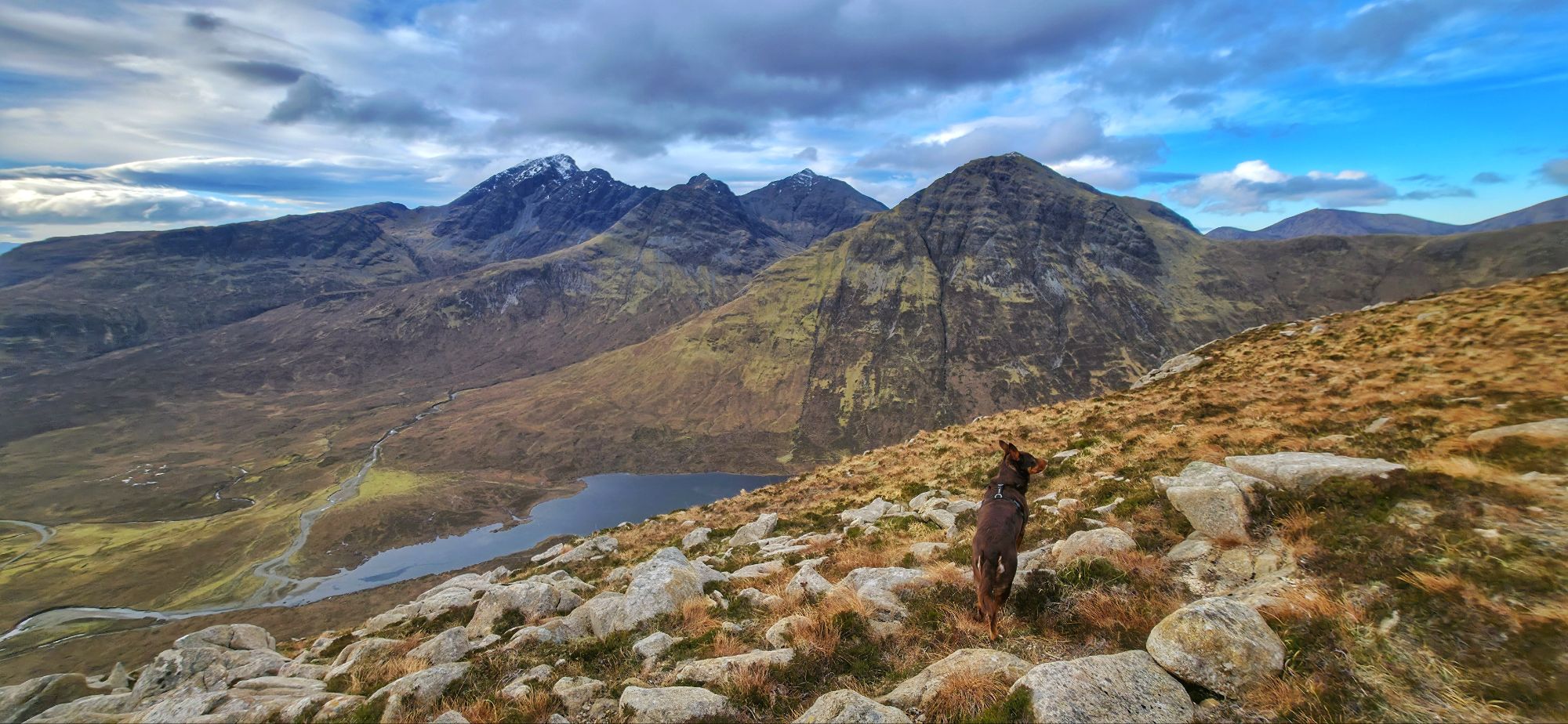
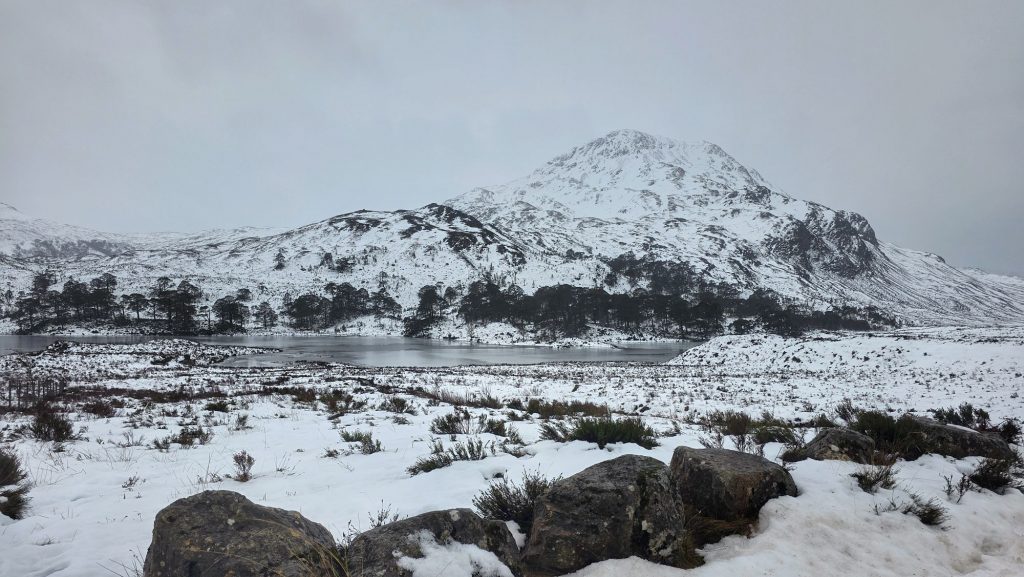
The movement south did not feel like retreat. It felt like negotiation.
Snow had changed the terms of everything. The main roads held, more or less, the kind of thin assurance that winter on Highland roads offers, passable, but only just, and only if you did not stray from them. Laybys were another matter entirely. Carparks, single tracks, the small indentations where road becomes something else briefly before returning to itself; all of it had been consumed. The snow had not fallen and cleared. It had fallen, half-thawed, then frozen again into something denser and less predictable than fresh snowfall. Every potential stopping place had to be assessed not as a place to park, but as a place from which I might not be able to leave.
I became stuck in two of them.
The first was beside a loch that did not stay the same from one day to the next. Overnight snowfall would transform it entirely, and then a partial thaw would strip the transformation back, never quite reaching the state it had been in before. The landscape was cycling through versions of itself, and the loch reflected each one faithfully. I camped there for a while and watched it change. There is something in that kind of impermanence that asks something of you, an attention, a willingness to keep watching rather than assume you already know what you are looking at. Each morning it was different. Each morning I unzipped the tent and looked again, never sure what the land had in store for me.
When I made my way back to the van, self-recovery from that layby required what it always requires: patience, methodical effort, and the quiet acknowledgement that urgency makes things worse. The second recovery came later. I had thought the snow had passed by then, but I was wrong.
Between the stuck moments, the driving was extraordinary.
The road would pass through one valley and deliver me into a Narnia-esque vista I had not been expecting; birch trees weighted and glittering, hillsides so uniformly white they looked architectural, light arriving at angles that made the whole landscape seem lit from within. Then, without ceremony, the snow would simply stop. Not thin, not diminishing gradually, just gone, as though an agreement had been reached somewhere above the treeline that this valley would be exempt. Green appeared, and actual road surface, and the ordinary business of winter without snow. Hope reorganised itself around the possibility that the Applecross Pass might be driveable.
I stopped in Shieldaig first, at the little General Stores, that kind of place that has quietly sustained remote communities for longer than anyone thinks to remark upon. I went in for supplies, talked about raspberry season as I purchased some jam made with local wild fruit, and came out with the warmth of a brief, ordinary human exchange that I had not realised I had been missing. By the time I left, the route had already extended itself beyond the plan. A longer day than intended had already begun.
The coastal single track to Applecross was worth every slow mile of it, as it always is. The sea to one side, the hill above, the road ahead demanding a quality of attention that didn’t leave room for much else. I drove it willingly, remembering every bend, view, and ascent like an old friend. But when I arrived, the snow gates were shut.
There was nothing to argue with. The pass had made its own assessment of the conditions and the snow gates were simply its answer. Bealach na Bà in full winter is not a road that bluffs. Closing it is not caution, it is accuracy. I turned around.
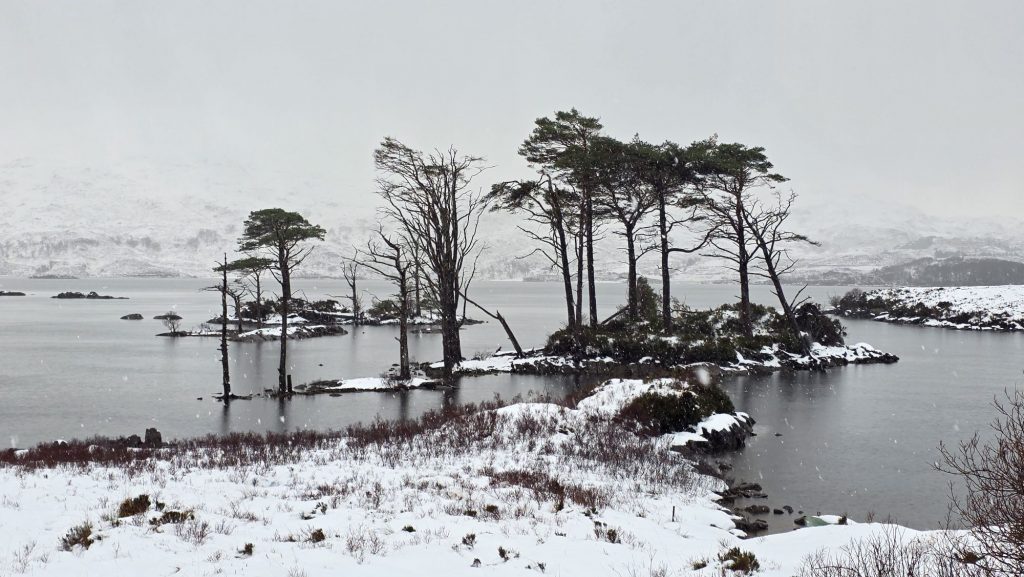
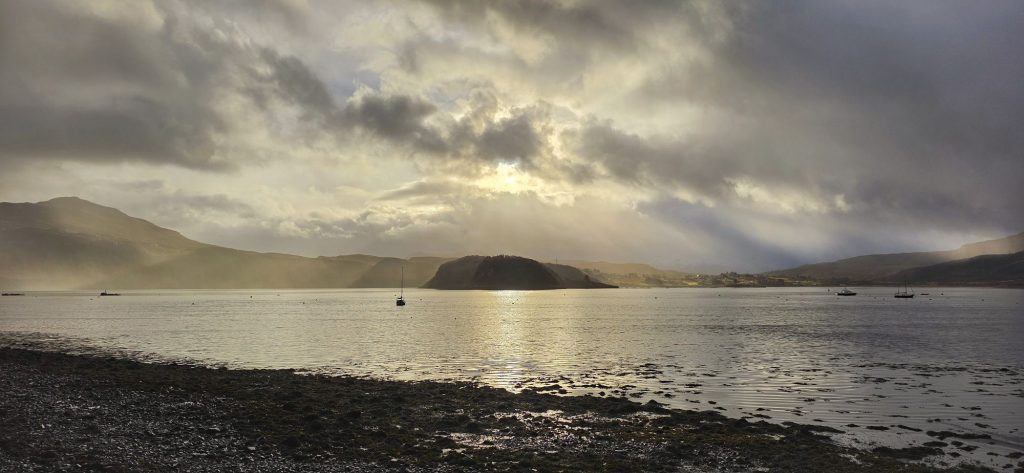
Retracing the coastal road meant retracing all of it, the full length again, then turning left instead of right this time, heading for Lochcarron. It was not the same journey in reverse. Light had shifted, perspective with it, and the sea had changed tone entirely in the time I had been driving away from it. I drove on toward Stromferry and the snow appeared as suddenly as it had disappeared. The next resting place I chose, cautiously, having believed the worst of the day was behind me, was the second one I had to recover from.
The self-recovery required the same tools and the same patience as the first. Afterwards, from that spot, I could see where I was going next with a clarity I had not expected. The road to Skye was open ahead of me, and the sun came out in the most mesmerising display to light my way over the sea.
I have never been neutral about Skye.
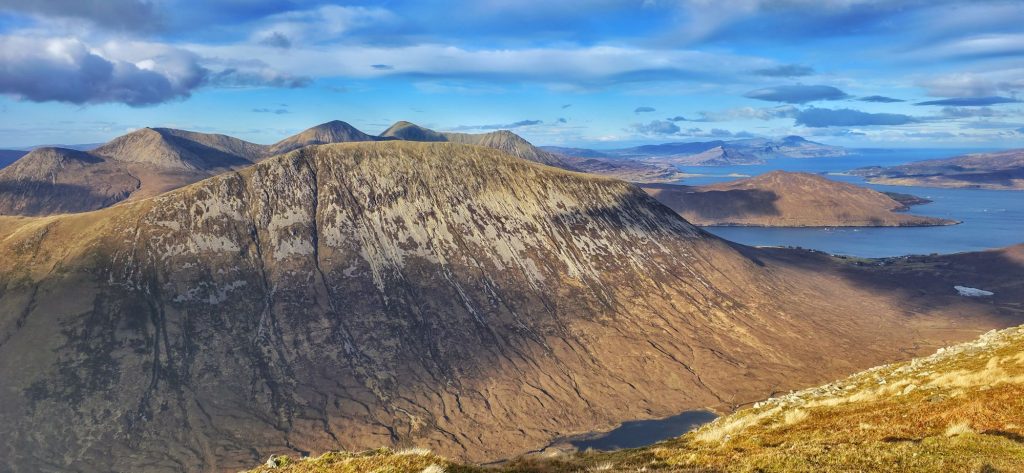
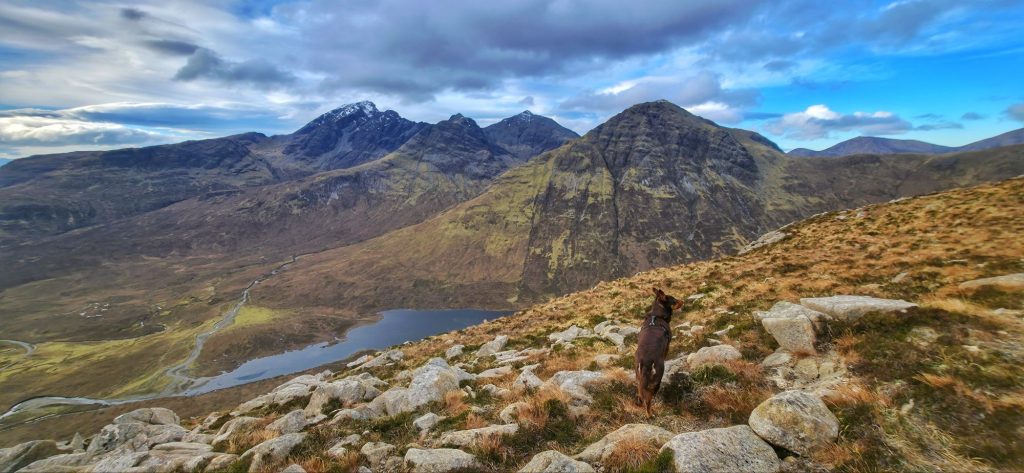
No matter where I was in those weeks of travelling, the Cuillin were already there in my mind, a dark ridge I could hear singing clearly even when I couldn’t see it. There is a particular quality to gabbro that does not resemble other mountains, neither the softer undulations of the mainland nor the limestone profiles further south. The Cuillin are themselves entirely, black and abrupt and steep in ways that rearrange your sense of what a hillside should look like. And their quieter sisters, the Red Cuillin, hold a warmth by comparison, rounded and ferrous in the right light, as though they have been weathered into something more patient. Both of them had been calling me the entire time.
I wanted to meet Adrian Trendall. He had written the book on Skye Munros I had been meaning to get hold of, and his work on the Cuillin Ridge Traverse had an authority to it earned through genuine knowledge of that landscape. What I wanted was the conversation that goes with it, the kind you can only have with someone who understands not just the technical detail but the specific pull that particular ridge exerts, the way it refuses to let go of you completely even when you are somewhere else entirely. I hoped the opportunity would come.
But before any of that, there was the matter of the land itself.
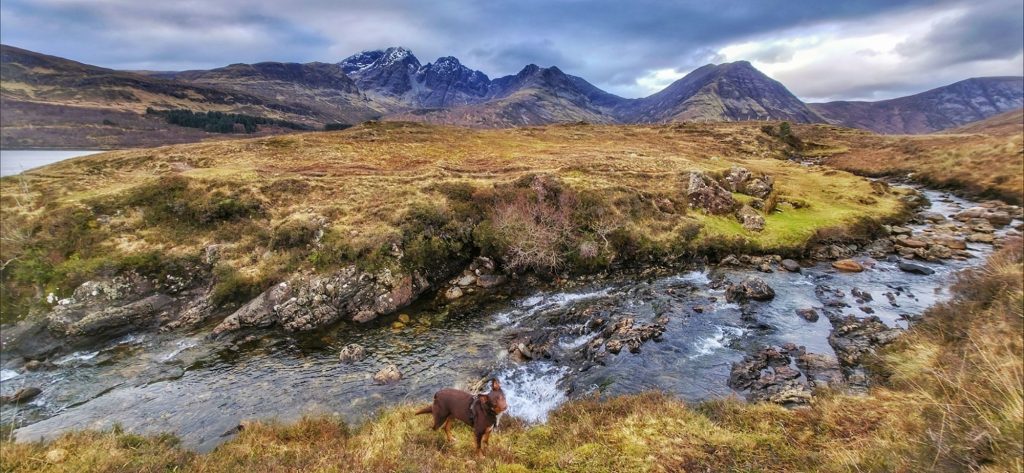
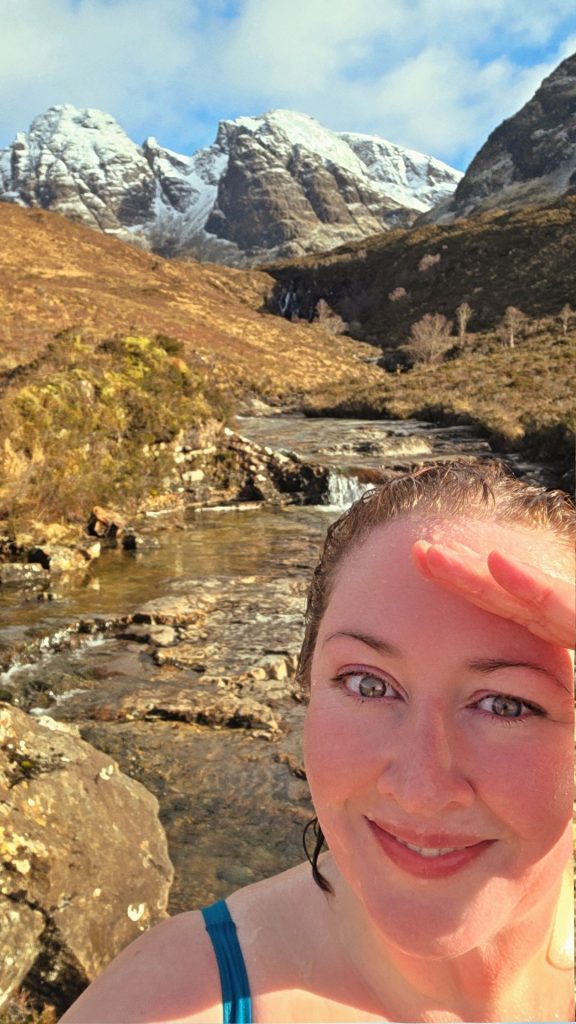
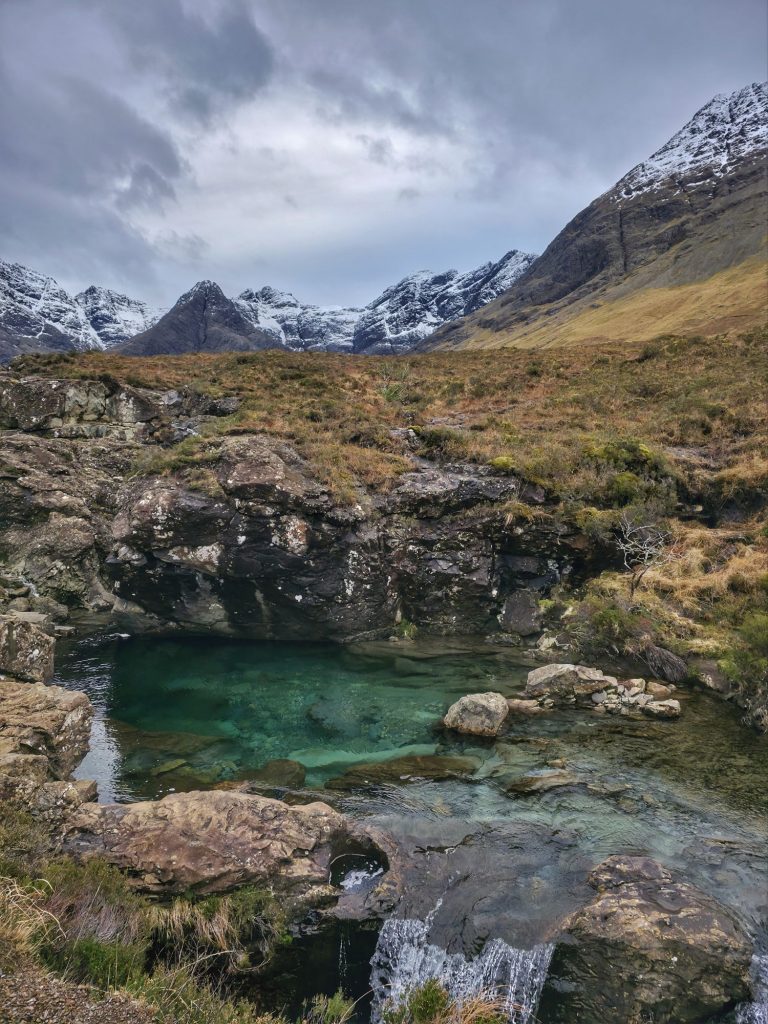
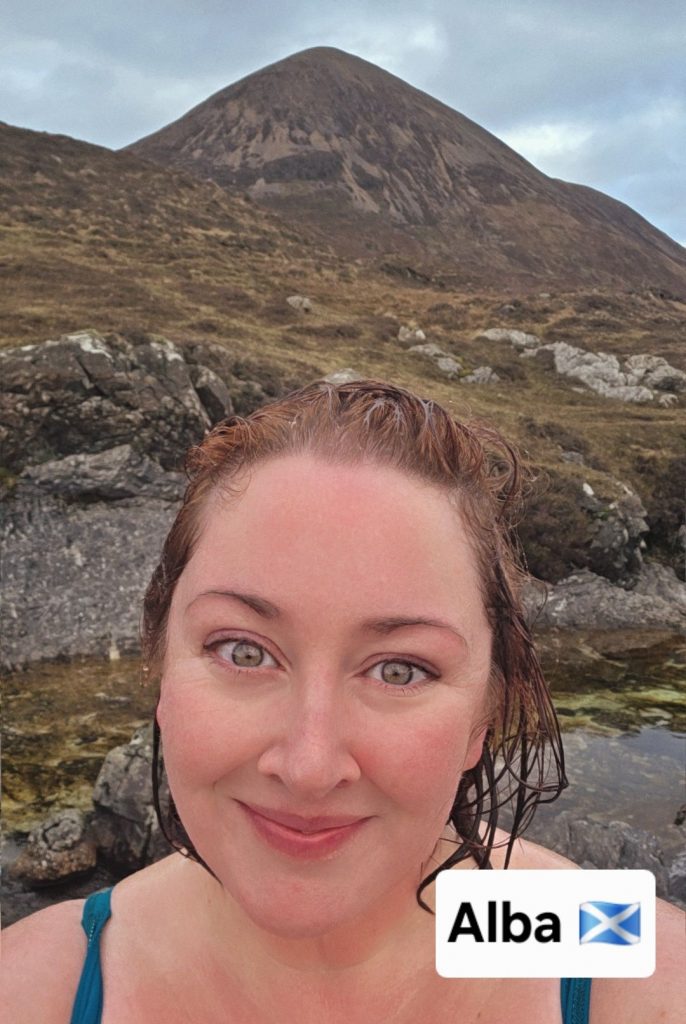
I found a place between the black and the red. Peaks snowcapped on all sides. A river of such clarity it made the cold look like a quality rather than a condition, fed by snowmelt and running fast and perfectly clean over the stones. No buildings. No paths worn into anything obvious. No sign that anyone else had recently thought to come here. I dipped in. Of course I dipped in. The cold was absolute and brief and completely clarifying in the way that only cold immersion is, the kind that doesn’t ask permission, that simply occupies you entirely for the seconds you are in it.
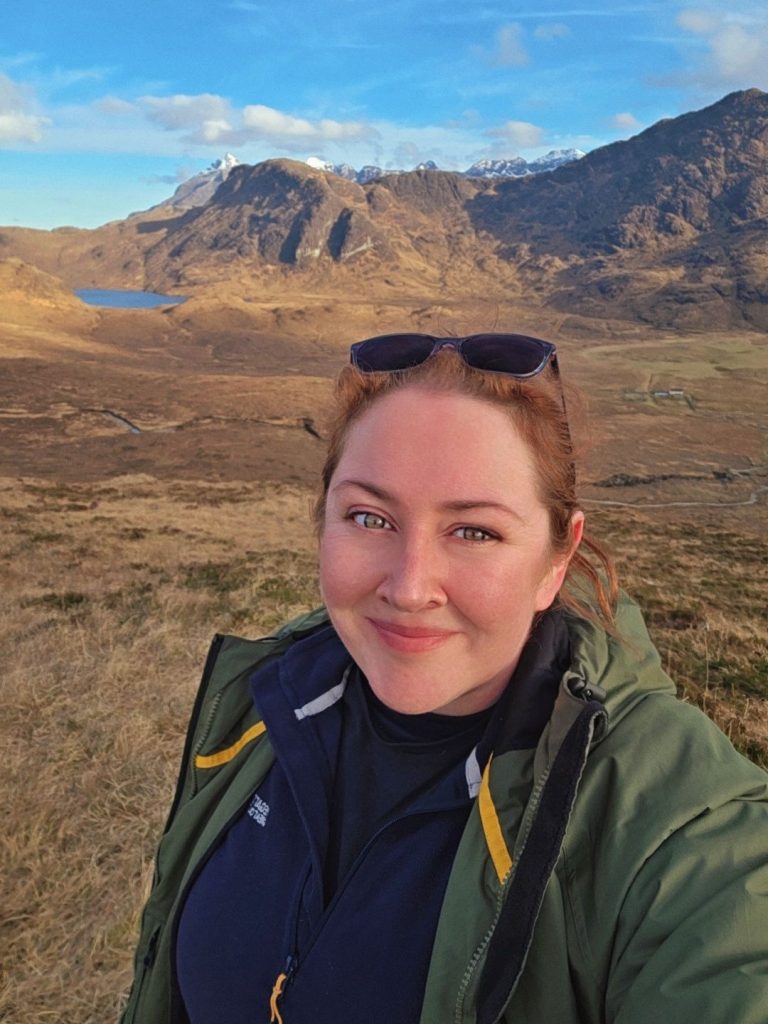
It was then I understood I was home. Not in the sentimental sense, though sentimentality would have been forgivable. In the more precise sense: this landscape knew me and I knew it, the recognition was mutual, and no explanation of either of us was necessary.
I began to walk.
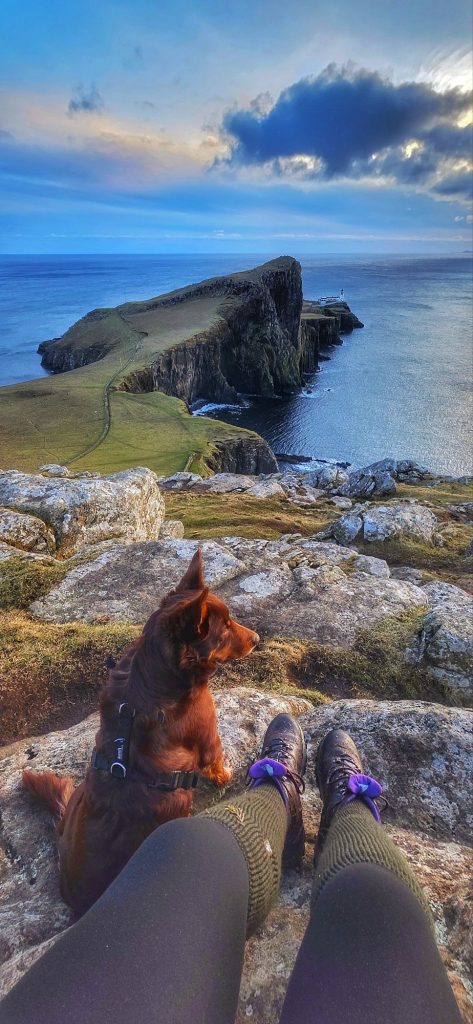
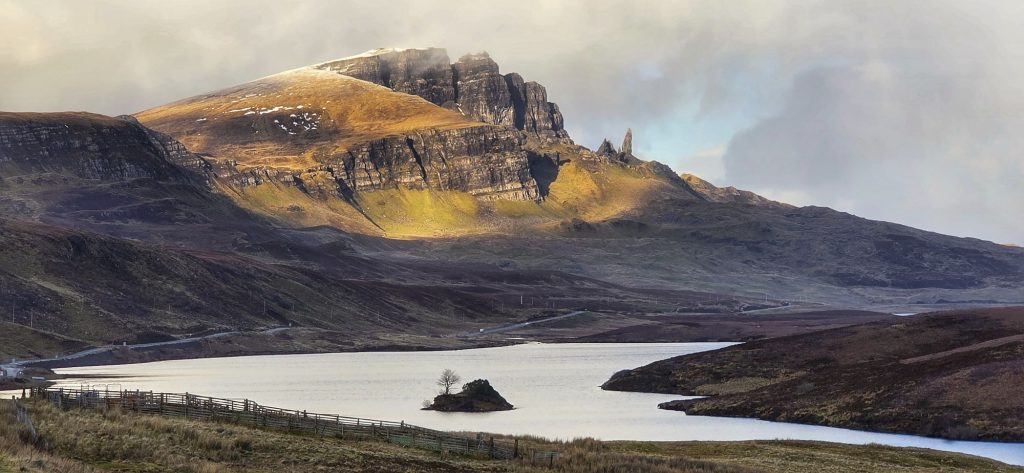
The intention had never been to cover the coastline. That is not how it happened. What happened was that I walked one day, and then another, and the geometry of the island kept offering directions I had not predicted, cliff edges that led to other cliff edges, promontories that asked to be followed out to their ends, drovers roads that carried the accumulated weight of all the movement that had passed along them before mine. Clearance villages folded into the hillsides, grass growing through what had been thresholds. I stood in several of them and tried to hold the scale of what had happened there without turning it into abstraction. The landscape does not let you be abstract for long.
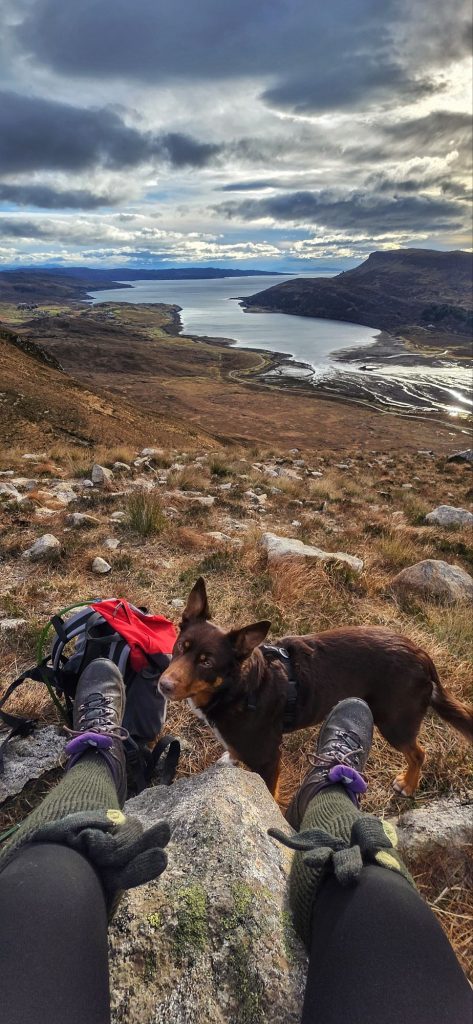
The cliff edges pulled me most reliably, and Celyn too, who has her own relationship with edges that is considerably less cautious while simultaneously far more skilled than mine. We walked them together, the two of us at the margins of the island where the land simply stops and the sea begins whatever it is doing, which in winter is usually something emphatic.
At one point I ran. This requires explanation. I am a strongwoman. I am built for force, for load, for the kind of effort that requires you to plant yourself and push. Running is not among my natural expressions of movement. But there was a hillside, and there was descent, and the gradient was exactly the kind that makes stopping impossible once momentum has been given permission, so I ran, and it was not graceful, and I didn’t care, and the hill did not care either, and by the time the ground flattened out I was laughing in a way I hadn’t expected.
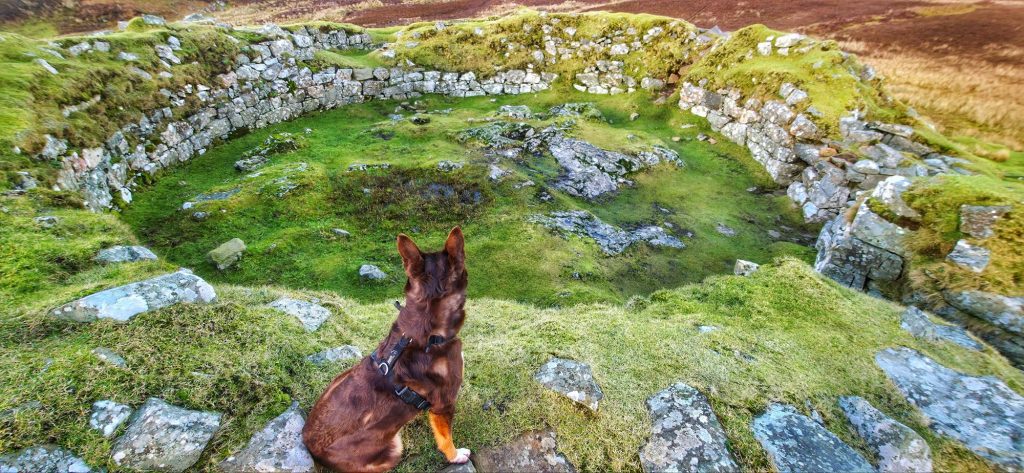
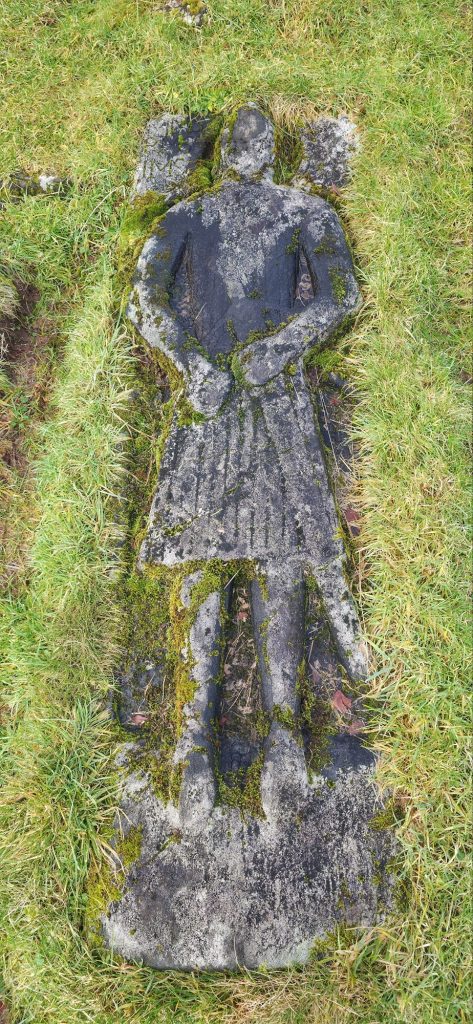
The brochs and kirks and cairns pulled me through the days. There is a particular quality of attention the old places demand; not reverence exactly, more a slowing down, a willingness to stand still in a place that has held human presence for a very long time and let that fact settle over you. Clearance villages I had already walked through, but there were older silences too, the kind left by people so far back they have no individual names in the record, only the stones they arranged into shapes that have outlasted everything else about them. Celyn moved through these places without ceremony, which was the right way to move through them. The wind did not stop for any of it. Neither did the weather. The wildlife observed from whatever distance it judged appropriate. Everything else was quiet.
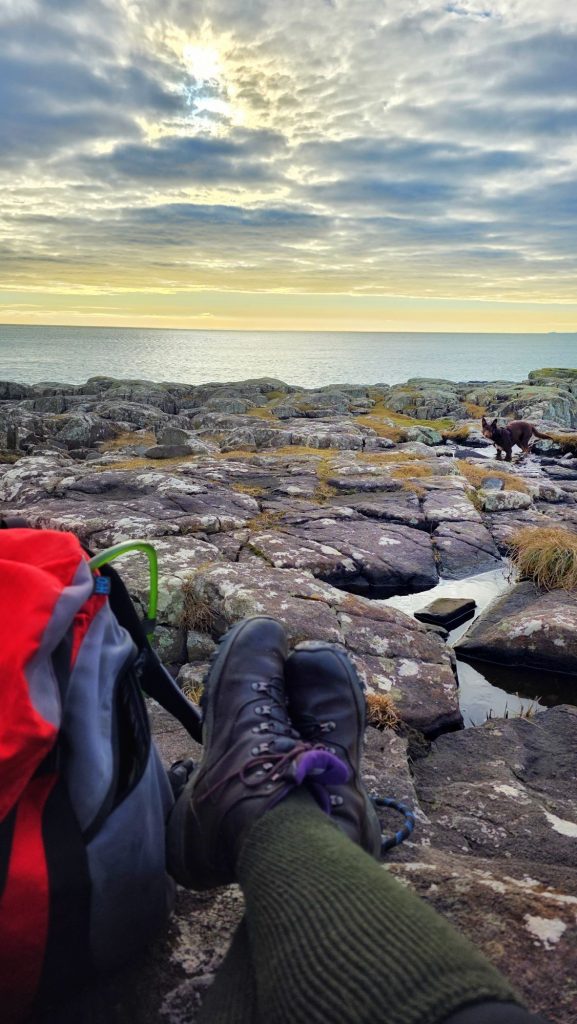
This was mostly how I lived in those weeks. Wild camping, pitched close to water or tucked into the lee of a hillside, the tent holding against whatever came in overnight, the camp broken in the morning and remade somewhere new in the evening. The van was a base and a pantry, stocked with what I needed and no more, available when I wanted warmth or a change of clothes or a proper meal, but not the place where any of the real living happened. The real living happened out in it.
Then came the day I did not expect.
I had been dealing with vertigo for longer than I wanted to admit. Unexplained, persistent, the particular cruelty of it being that it had returned to me the heights I had always loved as something to be afraid of. I had been working at it methodically, spending time at the bouldering wall, unlearning the fear one small hold at a time, rebuilding a relationship with exposure that the vertigo had quietly dismantled. I had not known how much progress I had made until the four peaks.
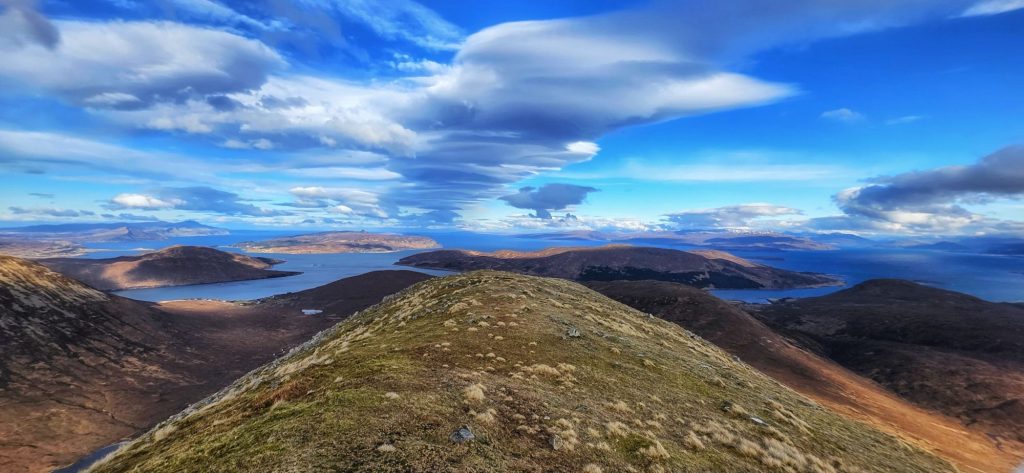
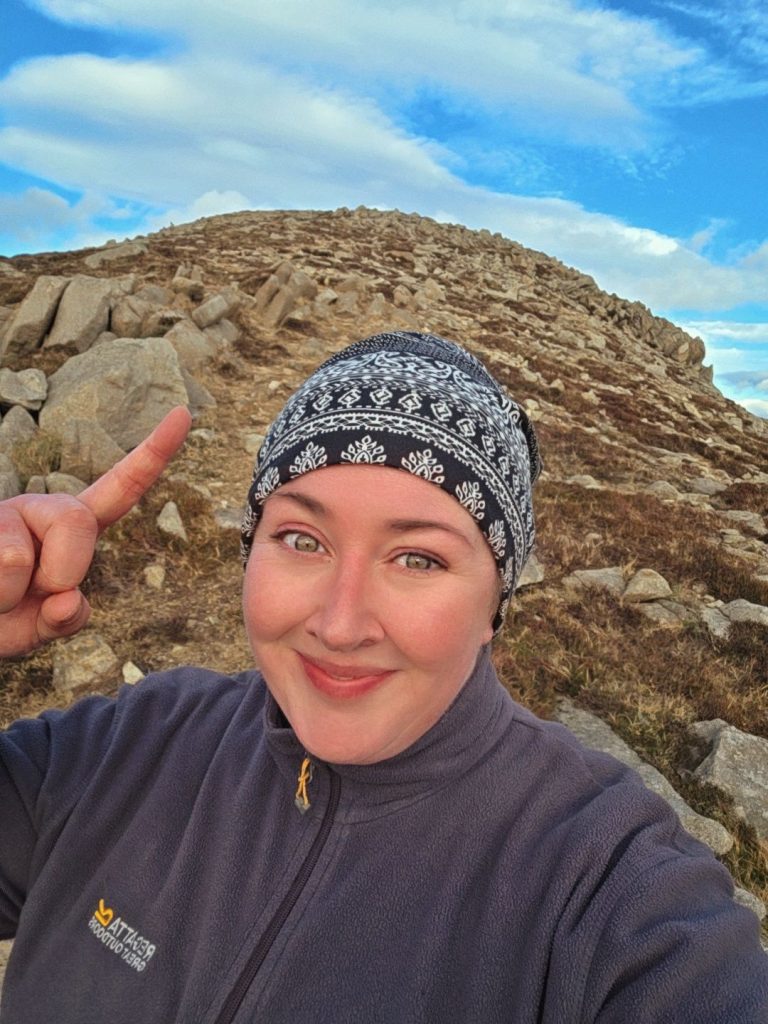
Not one. Four. In a single day, a ridgeline that connected three of them into one long, continuous conversation with the high places. And the vertigo simply was not there. Whatever had been holding in my vestibular system or my nervous system or whatever combination of the two had been conspiring against me, it had dissolved somewhere between the first ascent and the traverse, and what replaced it was the feeling I remembered from before, the one I had been trying to get back to for long enough that I had stopped being certain I would.
Celyn was delirious. She has always been most entirely herself in the high places, something in her that the hill brings out in the same way the hill brings something out in me. We celebrated every foot of ascent together with an unselfconsciousness that would have been embarrassing anywhere else, the two of us ridiculous and joyful and not even slightly concerned about that. At the summit of each peak I stood and looked and felt something that required no further analysis.
My only regret was the bivvy. I had left it in camp at the base, a decision that felt reasonable in the morning and foolish by the afternoon. To have stayed up there, in that air, on that ridgeline, under whatever sky the night brought in, would have been the thing. But I carry the knowledge of it now as something still available, still possible, still waiting to be done properly.
I did have to break the peace occasionally, of course. Not often, and never for long.
But only briefly. Short interludes, each one. I would restock, reconnect for just long enough, and then the landscape would begin to reassert itself, as it always did, as it always does, and I would feel the pull of the hills stronger than the pull of the comfortable, and I would fade back in. No one I knew on Skye questioned this. No one looked at me with that particular expression, or asked what on earth I was thinking, or introduced a note of concern that was really a note of judgement. Out here, the logic of living close to the land is simply legible. It does not need defending.
That was its own kind of peace. Not the peace of the hillside, which is immense and impersonal and indifferent to you in the most clarifying possible way. A different, quieter kind. The peace of being understood without having to explain yourself. Of moving through a place as though you belong there, because you do, and because the place knows it, even if you sometimes have to travel a long way to remember it yourself.
ClcKTFNuYXBjaGF0LzEzLjc5LjAuNDQgKFNNLVM5MzhCOyBBbmRyb2lkIDE2I1M5MzhCWFhVNUJZSTMjMzY7IGd6aXApIFYvTVVTSFJPT00Q3taXsoC0+QU= 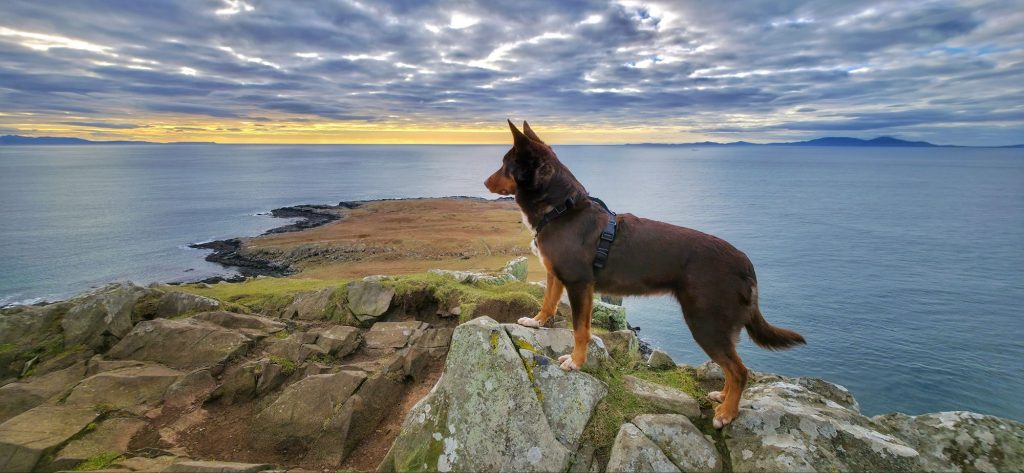
ClcKTFNuYXBjaGF0LzEzLjc3LjAuNTIgKFNNLVM5MzhCOyBBbmRyb2lkIDE2I1M5MzhCWFhVNUJZSTMjMzY7IGd6aXApIFYvTVVTSFJPT00Q3taXsoC0+QU= 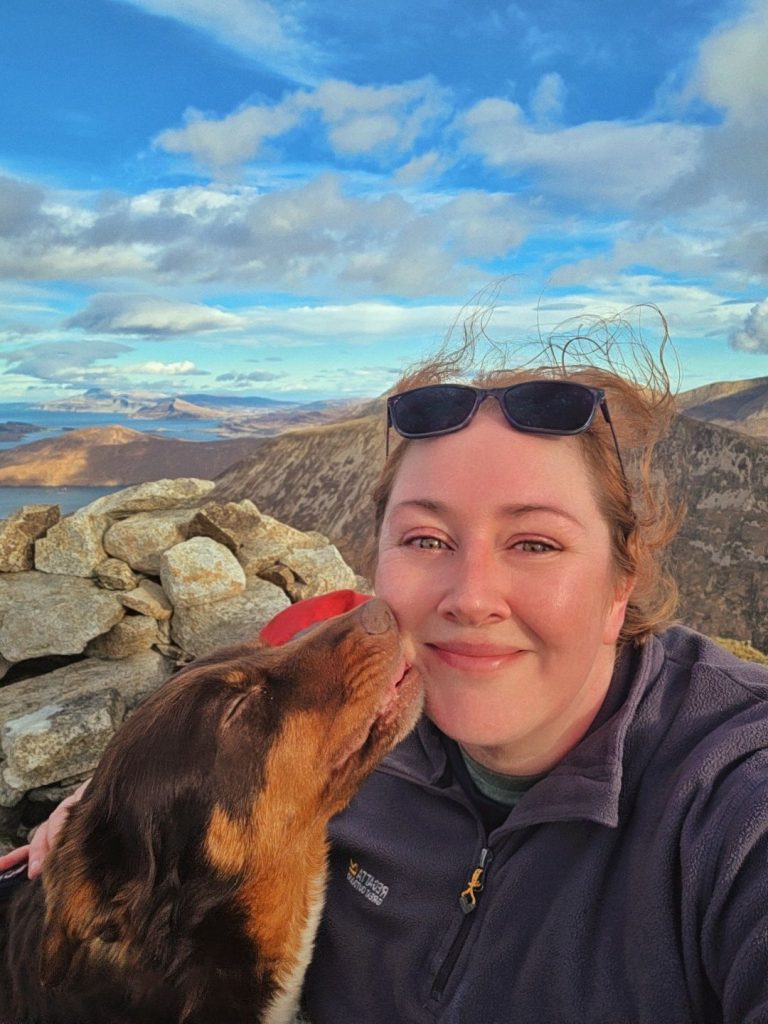
ClcKTFNuYXBjaGF0LzEzLjc3LjAuNTIgKFNNLVM5MzhCOyBBbmRyb2lkIDE2I1M5MzhCWFhVNUJZSTMjMzY7IGd6aXApIFYvTVVTSFJPT00Q3taXsoC0+QU= 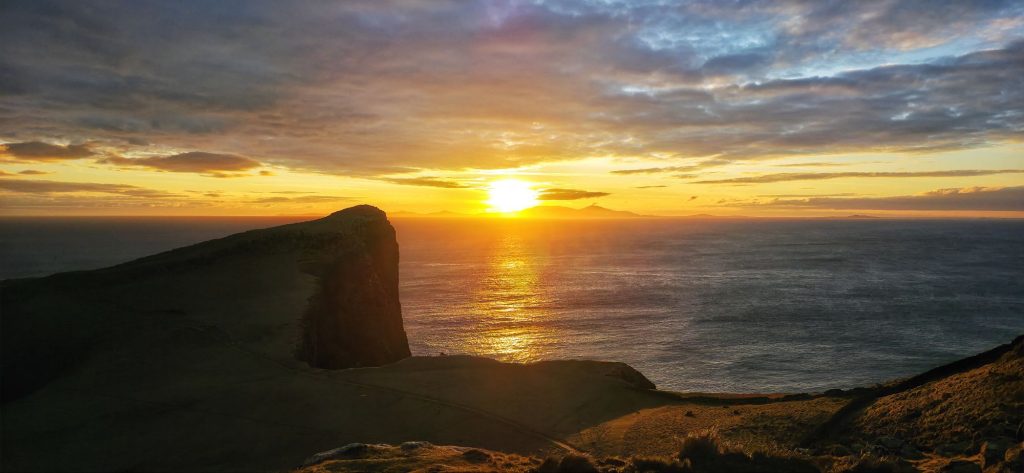
ClcKTFNuYXBjaGF0LzEzLjcyLjAuNTUgKFNNLVM5MzhCOyBBbmRyb2lkIDE2I1M5MzhCWFhVNUJZSTMjMzY7IGd6aXApIFYvTVVTSFJPT00Q3taXsoC0+QU= 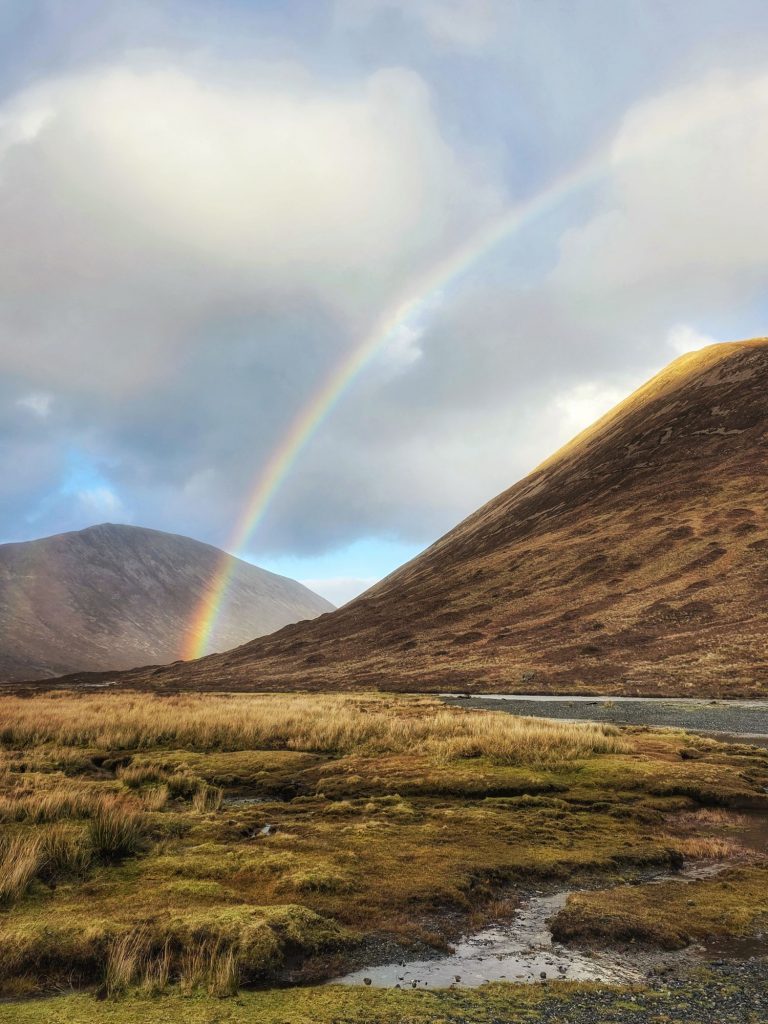
One response
wish you all the best