The next movement of the journey did not begin with a decision to go further north. It began with the opposite: the realisation that staying where I was would soon become more difficult than leaving.
Overnight snow in the east had settled heavily enough to alter the entire tone of the ground around me. What had been open and workable the evening before had tightened into something slower, more resistant. Even on foot the going was difficult, the snow reaching mid-calf, and I had half resigned myself to being stuck here for the foreseeable unless I could release my van from the snow.
Digging out the vehicle took time. Self-recovering required effort that sharpened the awareness of how quickly margins can close in winter. The forecast offered little encouragement; more snowfall, lower temperatures, a narrowing window in which movement would remain practical.
So I moved west in an attempt to avoid the worst of the weather.
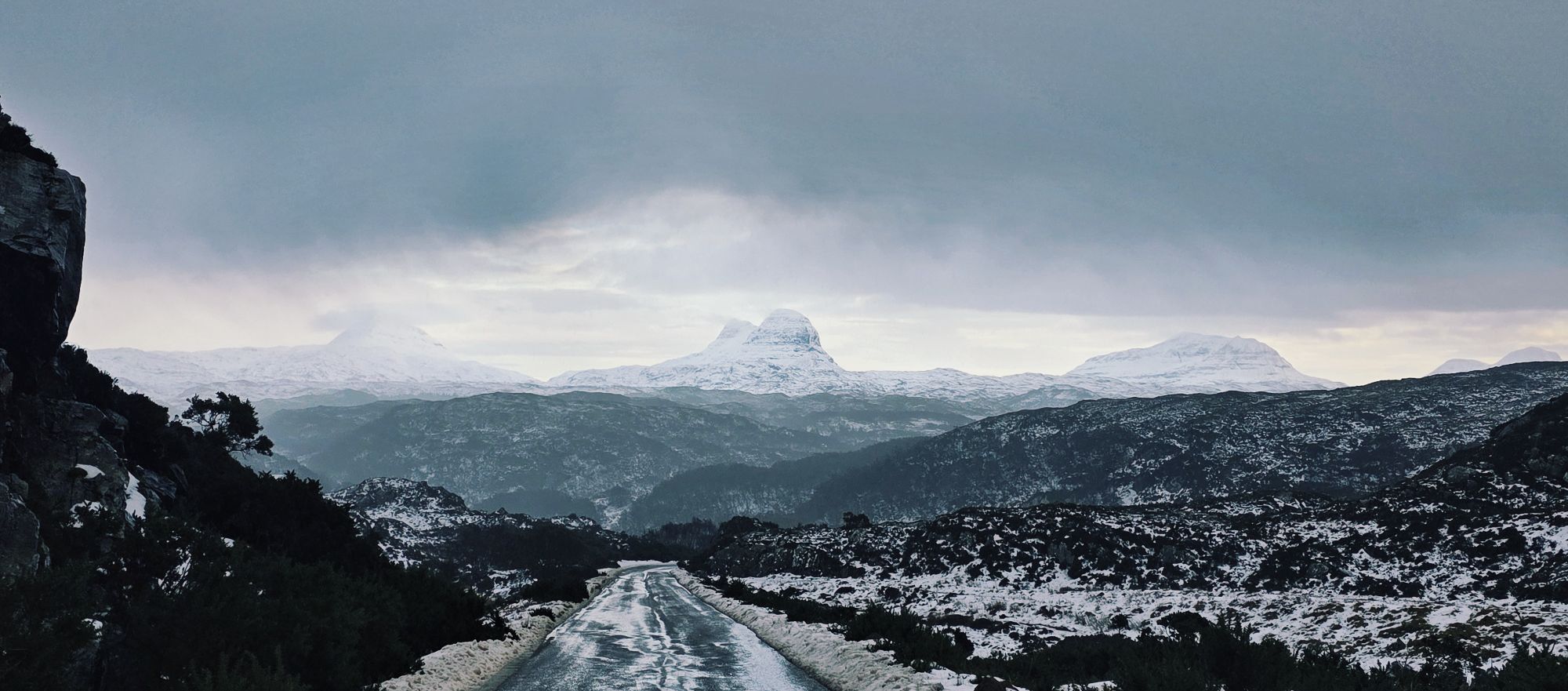
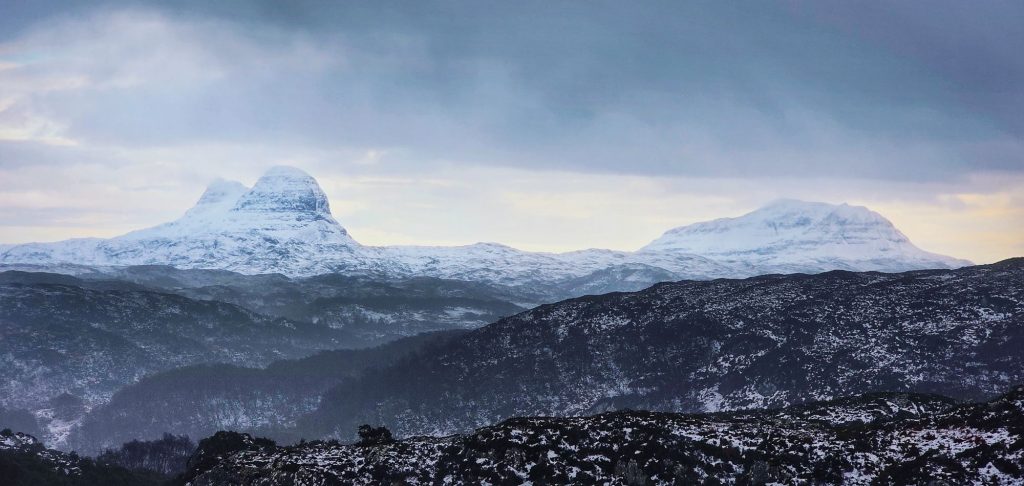
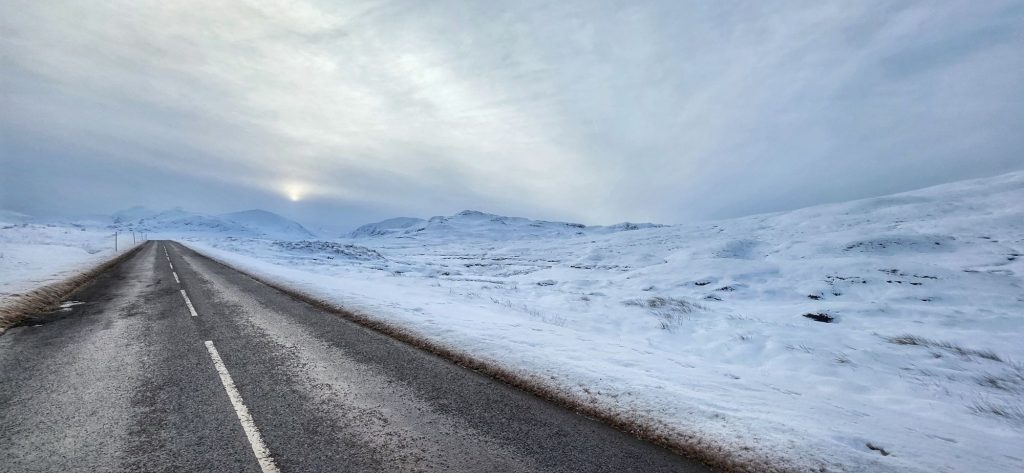
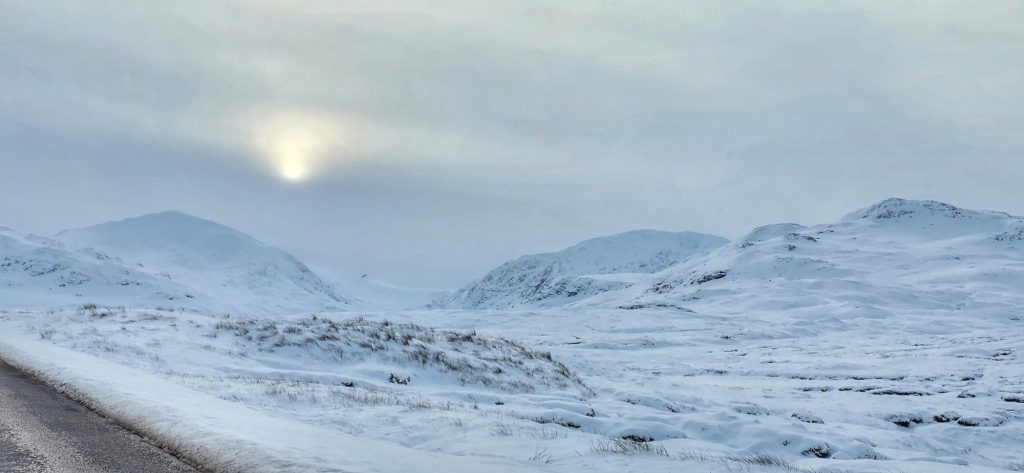
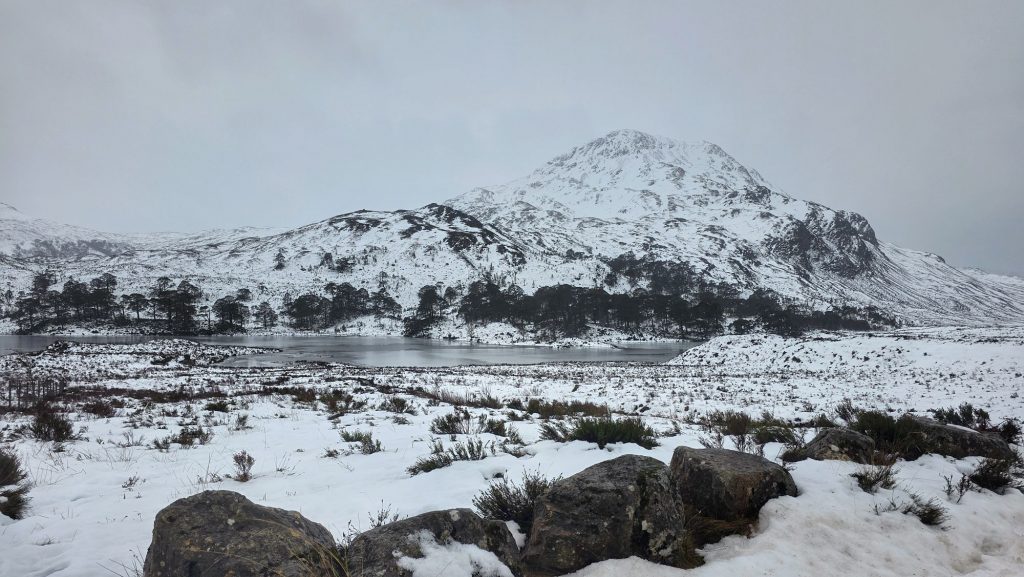
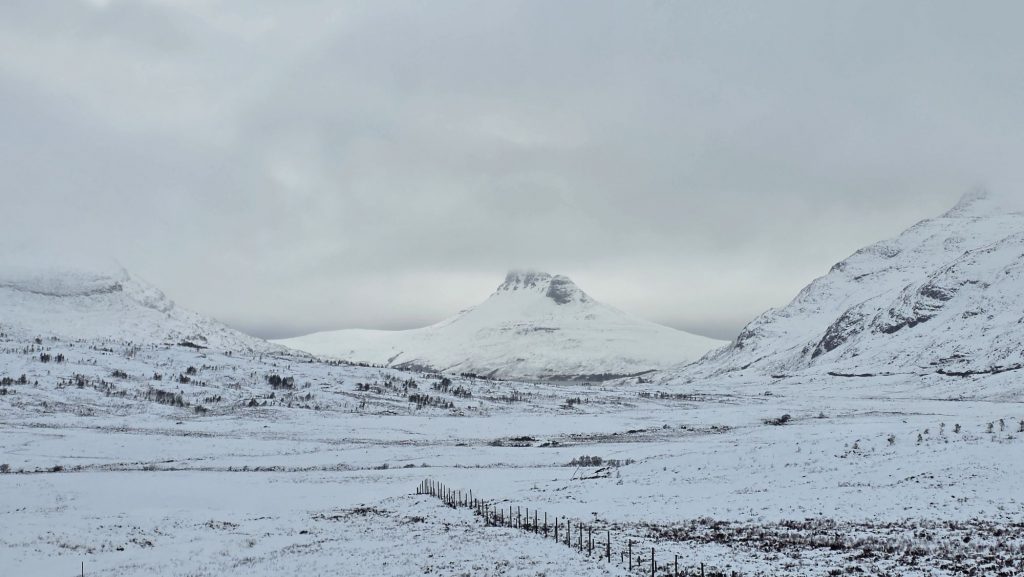
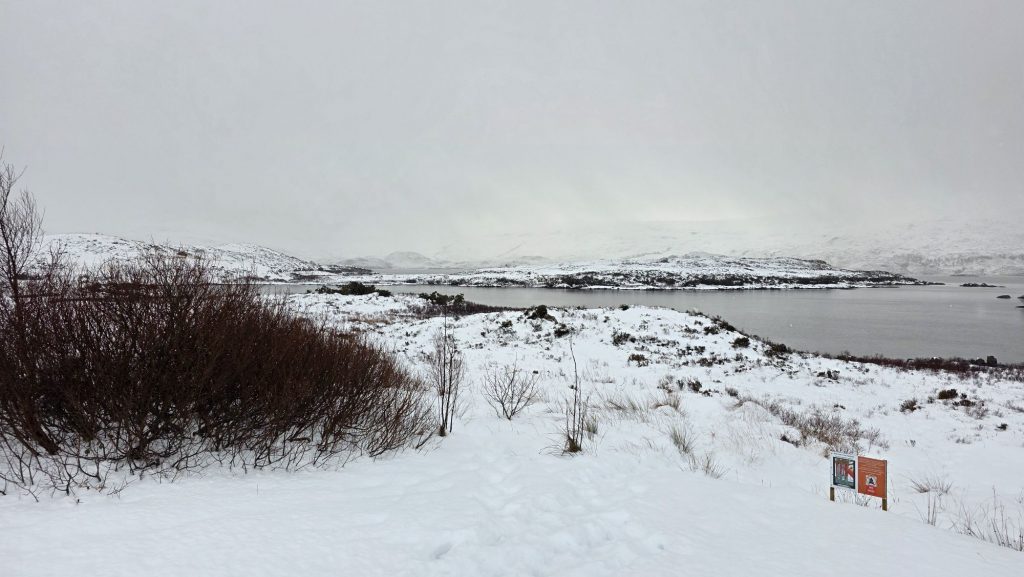
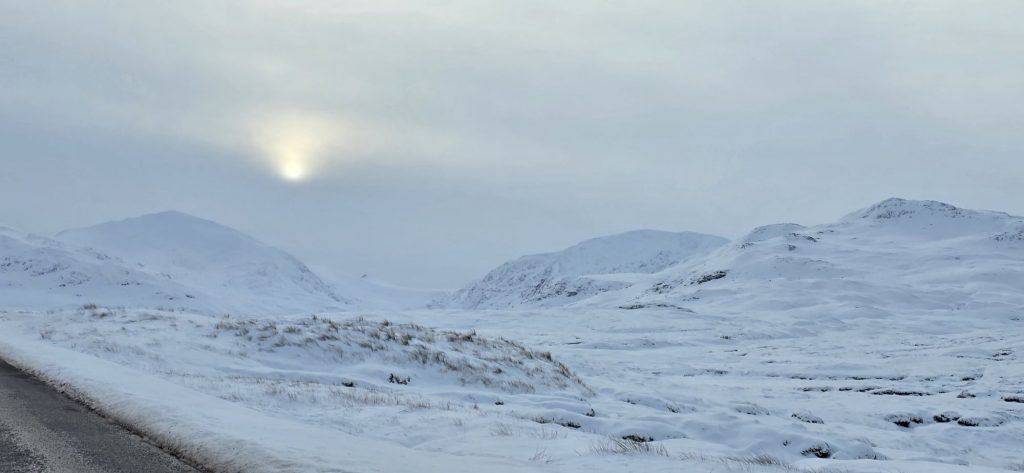
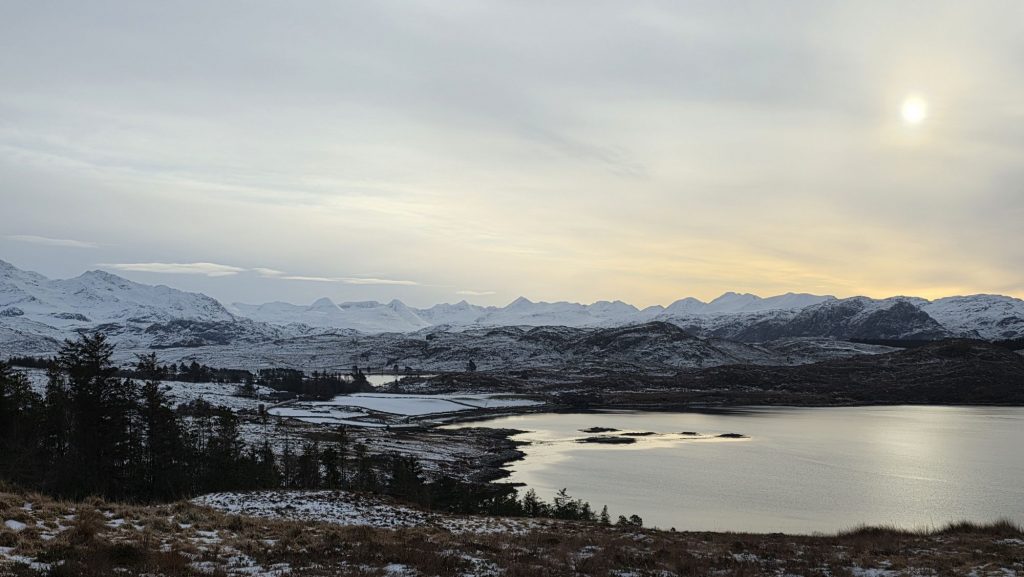
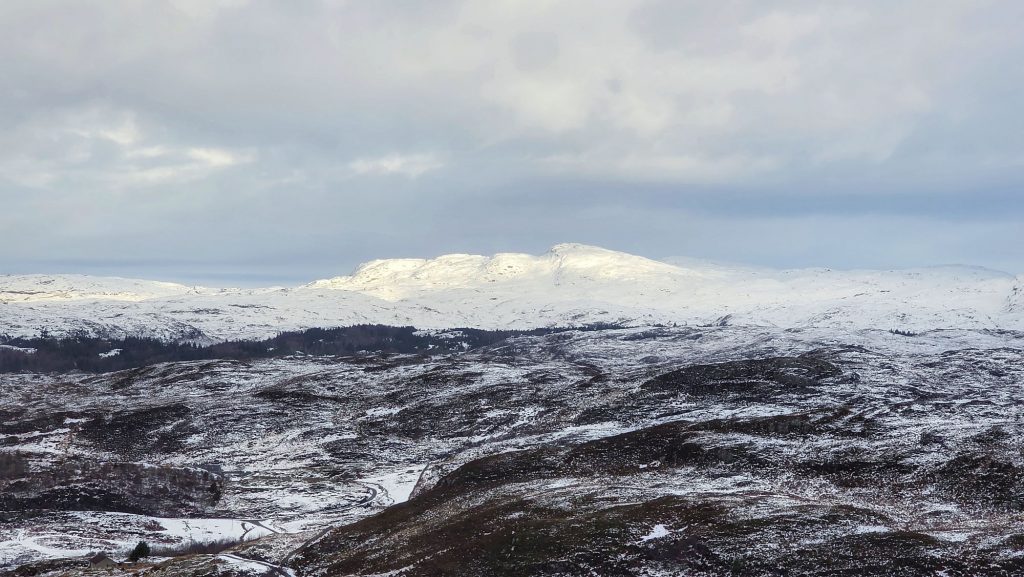
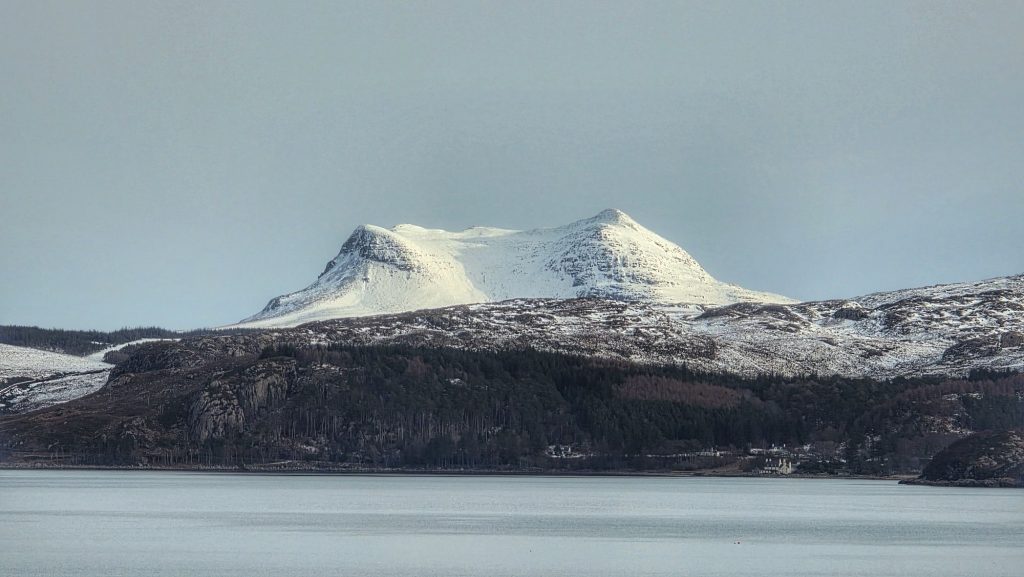
The day began beautifully. The land was completely blanketed in snow, vast hills and glens softened into a continuous white that seemed to absorb sound as well as colour. Driving through it felt like travelling inside a held breath. Every ridge line wore winter differently, some smoothed into quiet contours, others etched hard against a pale sky. The scale of the Highlands in those conditions was extraordinary; huge distances made gentle by snow, familiar ground rendered almost unrecognisable, and for a while the journey was simply a joy.
There is something profoundly regulating about winter landscapes when you allow yourself to meet them on their own terms. The noise of modern life recedes not just physically but psychologically. Decisions simplify. Priorities reorder themselves around warmth, movement, light, weather. In that early part of the drive I could feel the familiar shift taking place, the nervous system settling as the landscape demanded presence rather than performance.
At first the roads allowed that joy to exist. The main east-to-west routes were either clear or carrying fresh snowfall that still provided traction. Snow fell intermittently, drifting across the windscreen in soft veils rather than settling into anything that demanded an immediate halt. The tyres could bite into the surface, and progress felt controlled, deliberate.
I had left the east expecting to find somewhere to stop and make camp within an hour or two, but instead the distance began to accumulate almost without permission.
Places that might normally have offered refuge were unusable; snowplough banking had sealed lay-bys behind compacted walls. Minor roads provided fewer safe opportunities than expected to leave the carriageway, if I could turn down and drive them at all. Even where the road itself remained driveable, the rest of the land – car parks, laybys, camping spots – had become unreliable, soft, deep, or frozen in ways that would make rejoining highways later uncertain. Each time I slowed to assess whether this might be somewhere to end the day, the same quiet calculation followed.
Not here. Keep going.
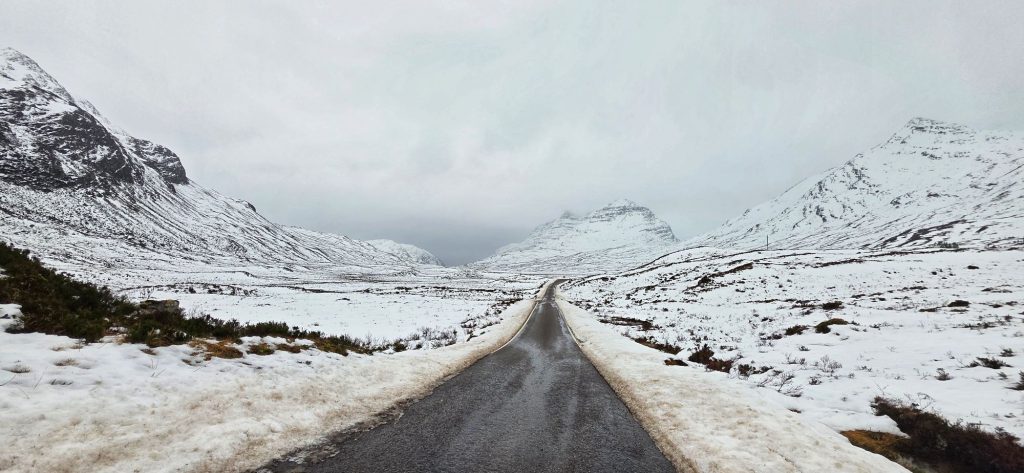
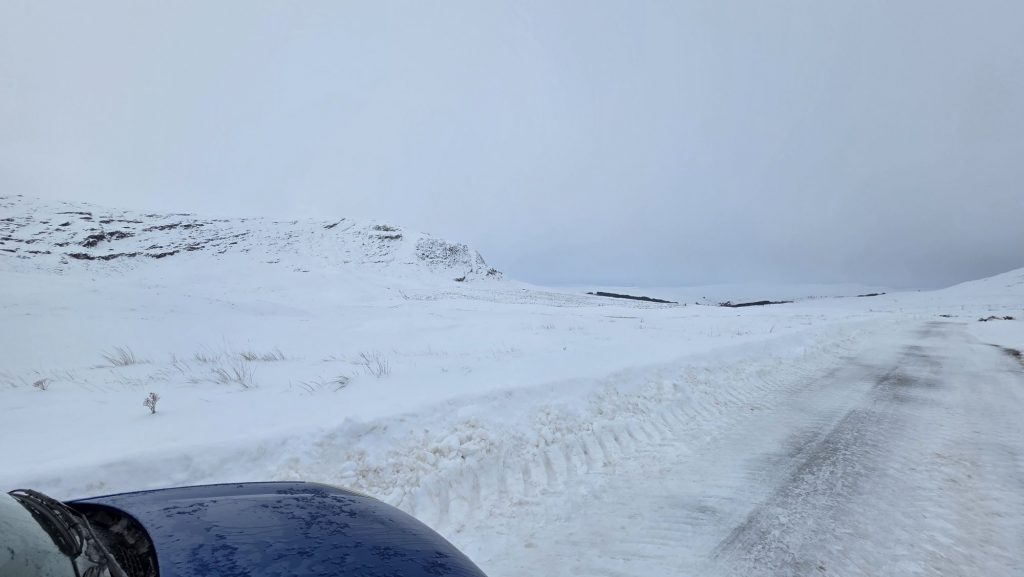
There was no single dramatic moment in which the journey changed character. Just a gradual awareness that I was travelling much further than intended simply because the landscape would not yet permit me to stop. Turning back offered no meaningful advantage, the weather behind me was worsening, the ground I had left was already under deeper snow. Forward remained the only workable direction.
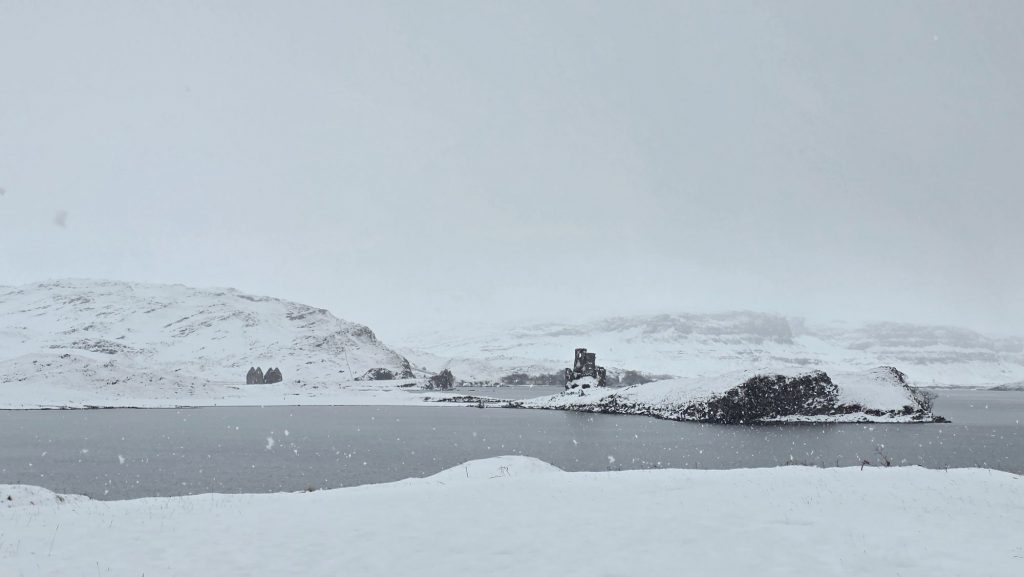
By the time I reached Lochinver I had already covered far more ground than planned. The forecourt at the fuel station was a sheet of compacted ice. I ended up helping push another vehicle clear before I could even get to the pump myself. Afterwards I headed inside the shop across the road, already anticipating the simple luxury of a hot coffee, something warm and ordinary to anchor the day, something I rarely allowed myself as I carried everything I needed, but this day had been challenging enough.
As I approached with the delight of expectation, I noticed a sign: the machine was out of order. It was a minor inconvenience in the scale of the journey, but in that moment it felt disproportionately disappointing. Any small comfort would have been welcome, but it was not to be. I left with a cold drink instead and continued my journey to find a place to stop and sleep.
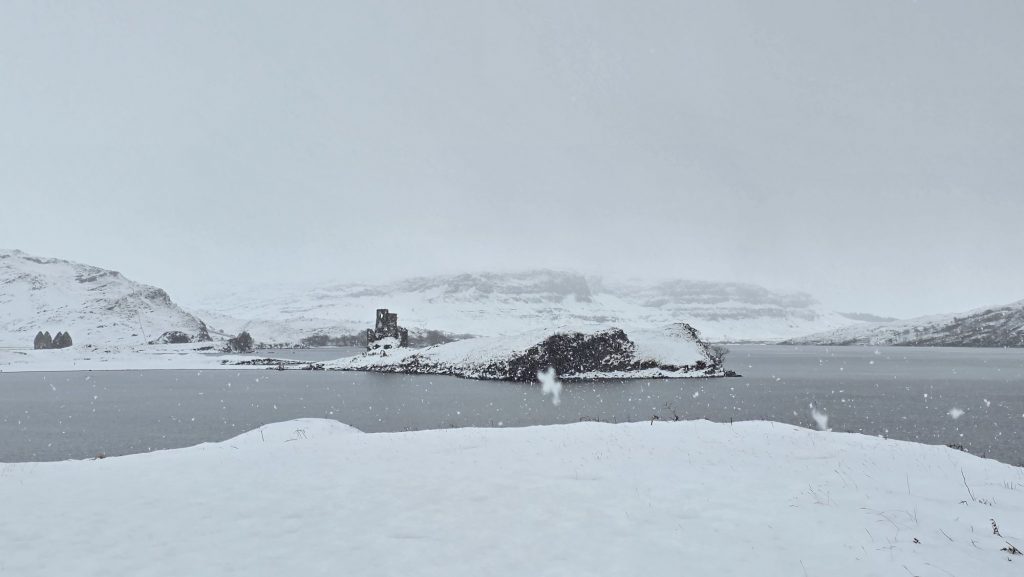
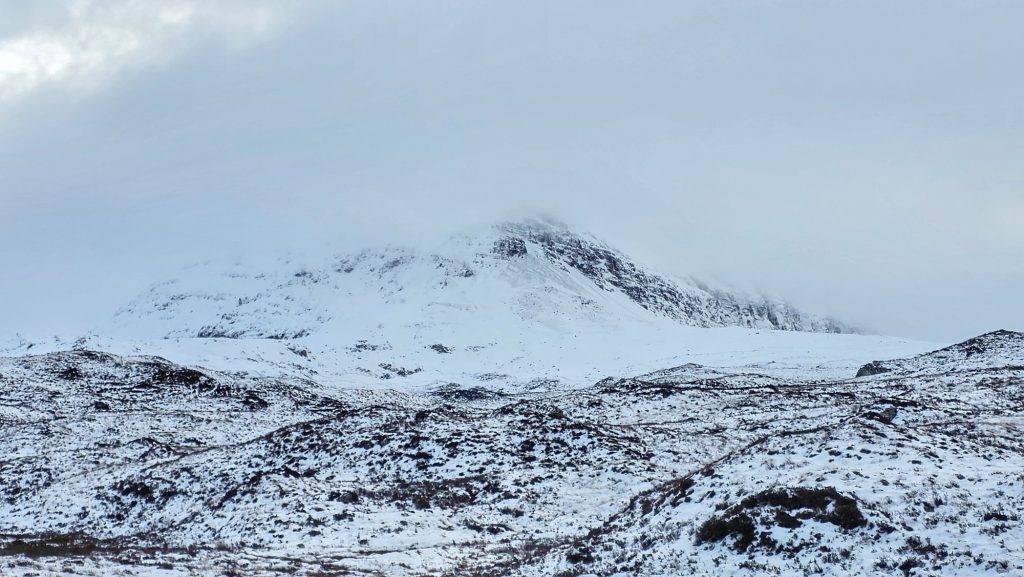
Further north, altitude altered everything. Attempting the higher route along the A894 towards Kylesku meant driving directly into cloud and active snowfall severe enough to erase visibility altogether. The road ahead ceased to exist in any reliable sense. Edges dissolved. Perspective flattened. Continuing would have required trusting movement over judgement.
So, I turned back. Lower down again, the contrast was stark. Clear sky in one direction. Obliteration in another. That was how the B869 became relevant, not as a destination, and certainly not as something I had intended to attempt in winter. Even in summer it is a road that demands respect: steep one-in-five gradients, blind bends, long exposed pulls and sudden drops that remind you very quickly how committed you are once you are on it. In those conditions, however, it appeared to be the only logical option. Retracing my steps made little sense given the worsening weather behind me, and the A894 was effectively impassable.
So I turned onto it.
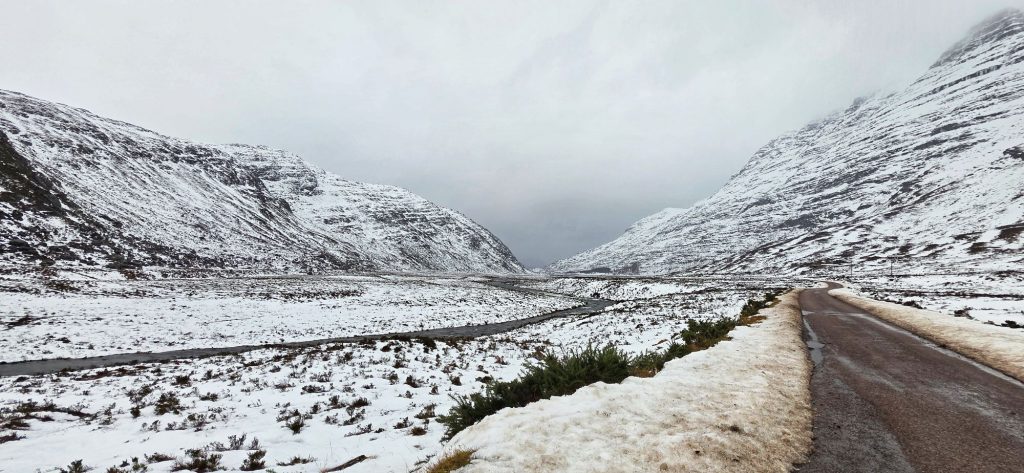
It began innocuously enough. No fresh snow lay across the surface at first, and the sky remained clear. Only on the bends and steeper pulls did the true condition reveal itself; thick, very visible patches of compacted ice left from previous storms. Neither hidden nor subtle, simply waiting to impede your progress. When the long gradient that would ultimately define the week rose ahead of me, I stopped.
There was no sense in testing traction on a surface that had already declared its intent. Darkness was approaching. Even partial progress would have created a worse problem than simply waiting. So I stayed in the vehicle overnight, the engine heat fading gradually into the stillness of a winter evening that felt suspended rather than threatening.
Snow fell again during the night.
By morning the temperature had dropped further. The surface that had already been marginal had hardened into something close to immovable. Standing there looking at the same stretch of road in clearer light, I understood with a kind of quiet certainty that I was unlikely to be leaving quickly.
The days that followed arranged themselves around a rhythm dictated entirely by light and temperature. A brief softening during the short winter daylight, a thaw that never quite reached deep enough to transform possibility into action. Freezing again by mid-afternoon, then light snowfall overnight resetting the surface before meaningful thaw could occur the following day. Each morning I approached the situation with cautious hope. Each afternoon I accepted the same answer.
Not yet.
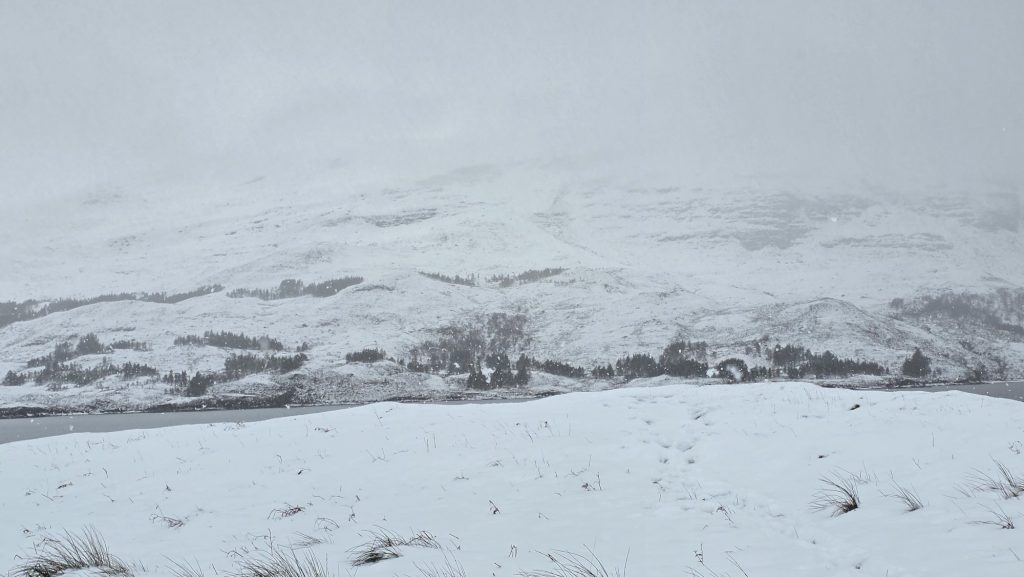
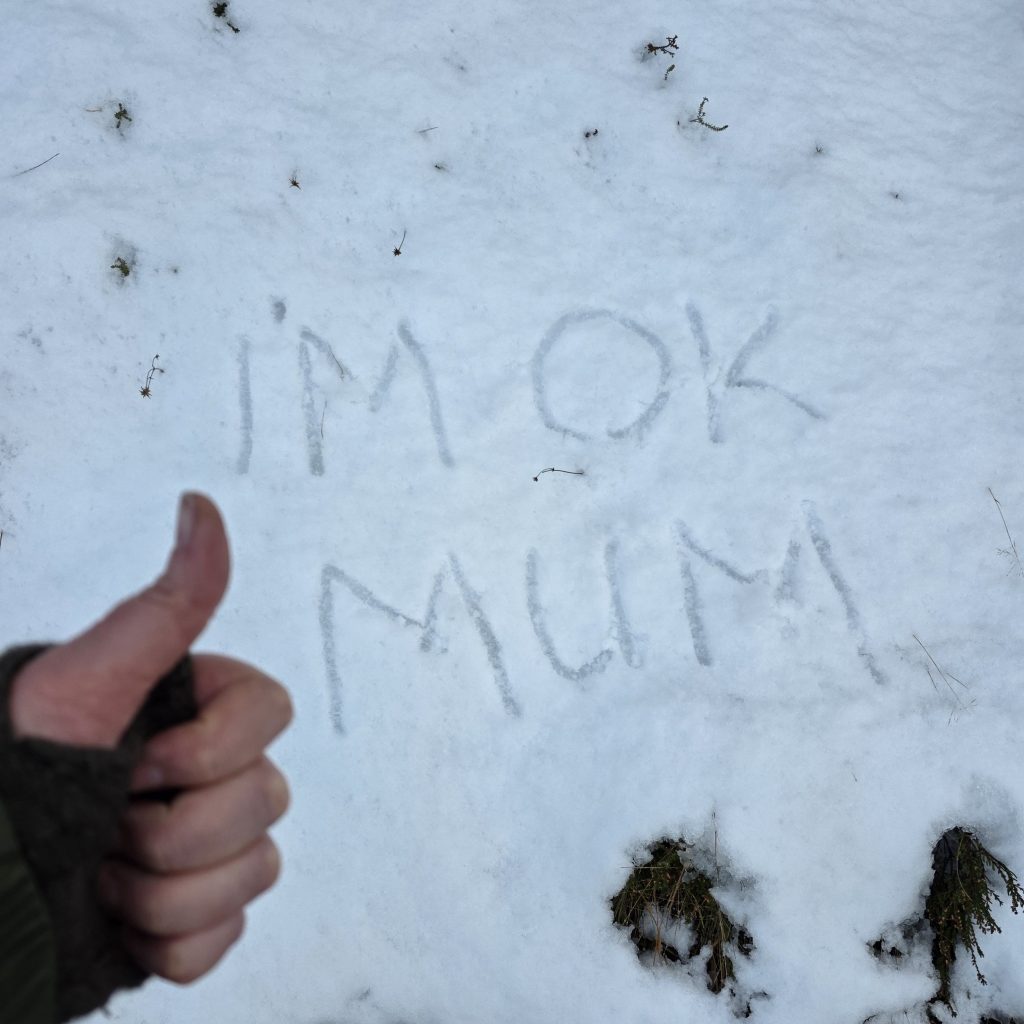
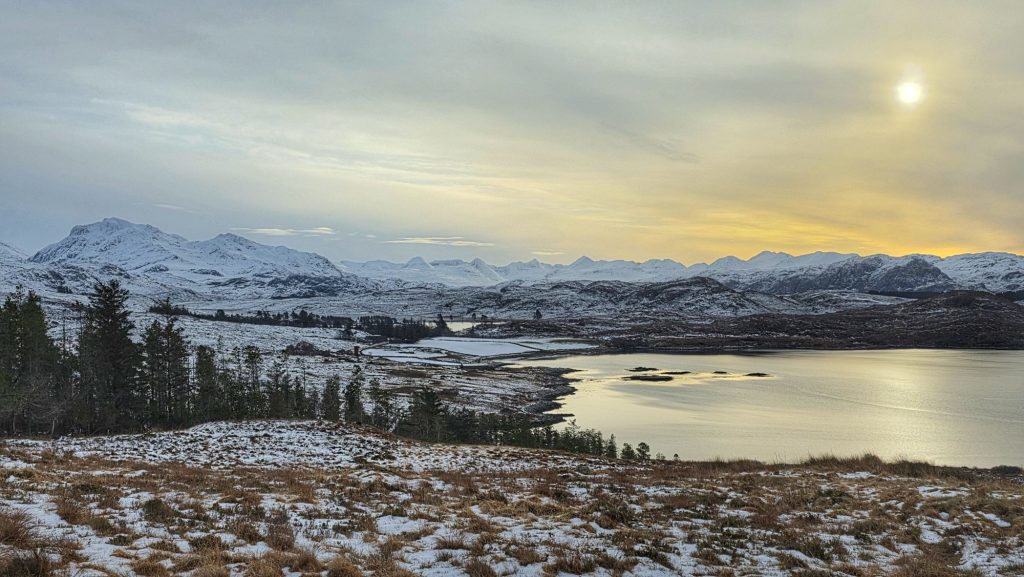
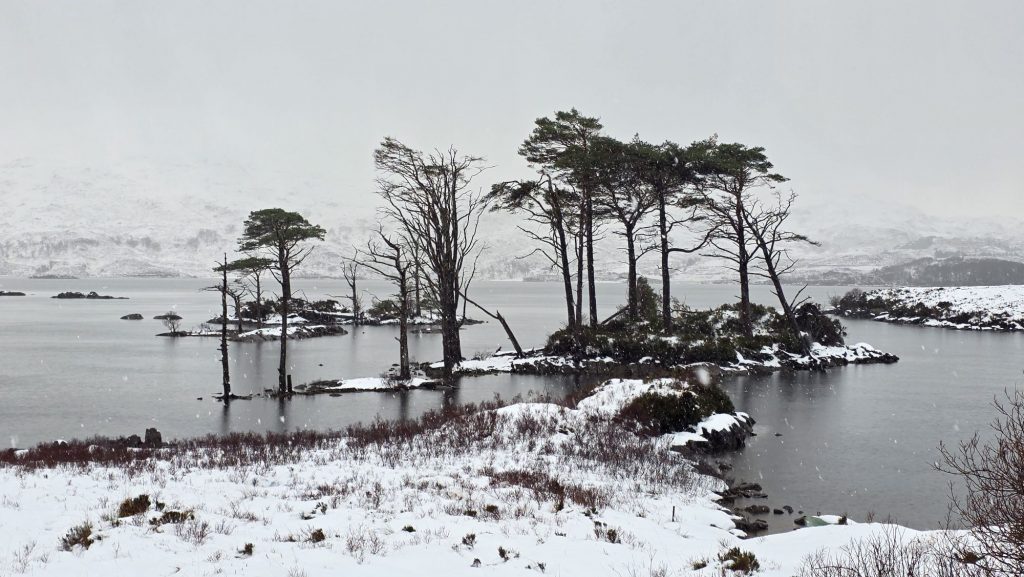
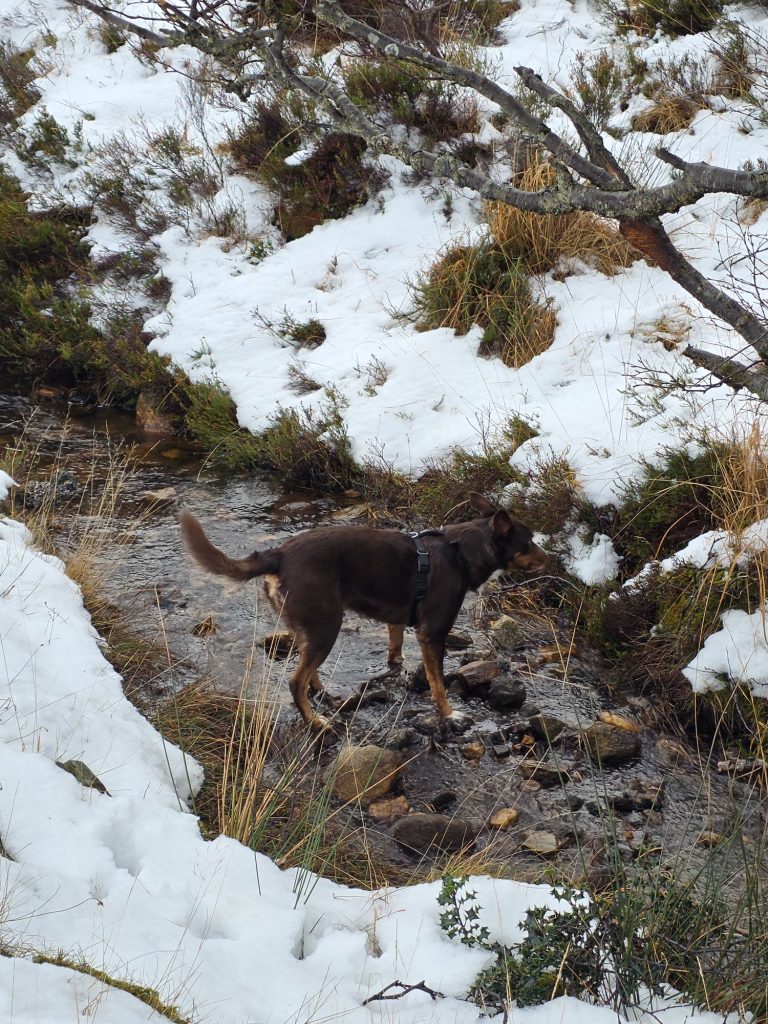
With travel temporarily removed from the equation, attention shifted upward. I began climbing into the hills above the road, wild camping on frozen ground and tracing ridgelines that opened the landscape into vast, silent perspectives. From that height the route I had taken became something I could observe rather than struggle against. I watched how sunlight reached certain sections and abandoned others. How meltwater briefly appeared before sealing again and shadow preserved the ice untouched.
It was an intensely peaceful week. Frustration existed, of course, moments of irritation, of wanting simply to move on, but the longer I remained there the more those responses softened. The landscape demanded patience and in doing so quietly taught it. Stress fell away not because the situation was easy, but because resistance became pointless. The only productive response was observation; reading weather, ground, and light. In that stripped-back state of living, freedom emerged not from comfort but from clarity. And eventually, slowly, these pattern shifted just enough to allow movement.
Progress came incrementally at first. A mile one day, another the next. Each short advance felt disproportionately significant. By then I had already made the decision to turn back towards Lochinver. Nearly a week had passed and the forecast had shifted again, announcing worsening weather further north. Continuing in that direction no longer made sense, but turning around did not mean the problem was solved. A stretch of road that I’d driven without issue to get here was now thick with compacted snow and ice, and it became my nemesis instead.
Improvisation became part of the process. At one point I found myself uncovering and then scooping grit and salt from roadside piles and spreading it across a frozen bend with a garden trowel, using a dog poo bag to protect my glove and my hand from the salt. It was inelegant but effective.
When the moment finally came to commit, the outcome was quieter than expected. The tyres slipped, found purchase, slipped again, then continued. What had held me for days gave way within minutes.
That afternoon the remaining distance unwound steadily beneath the wheels until I found myself back in Lochinver, completing a journey that had taken a week to resolve. I went again in search of the coffee I had missed on the way through; having spent a week surviving the elements I believed I had earned it, but they were still waiting for beans. Delivery vehicles had been unable to make it down the main road.
The irony that deliveries of coffee beans couldn’t get there in trucks along clear A roads, yet I had made it along one of the most challenging roads in the UK in winter, through snow and ice, in a front-wheel-drive MPV, was not lost on me.
With the weather in the north and west set only to worsen, one clear option began to form on my horizon. It was time to head for the islands to revisit some of my favourite Hebridean landscapes. What an extraordinary decision that would turn out to be. The islands not only did not disappoint, but they were so glorious I fell in love with them all over again in a way even I did not expect to.
But first, I had to get there.
No responses yet