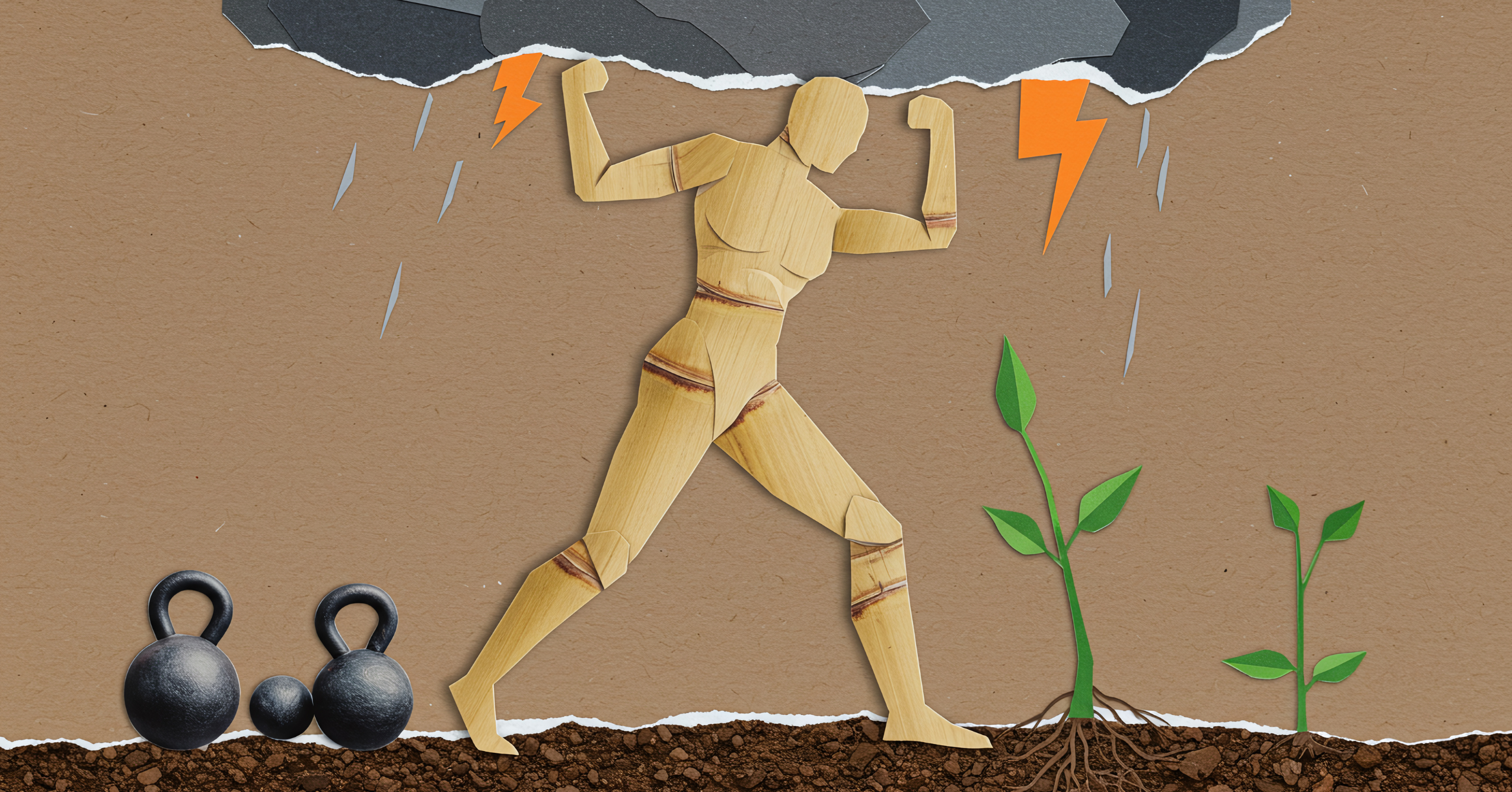
How deliberate stress exposure builds the capacity to handle whatever life throws at you.
Read on or listen here:
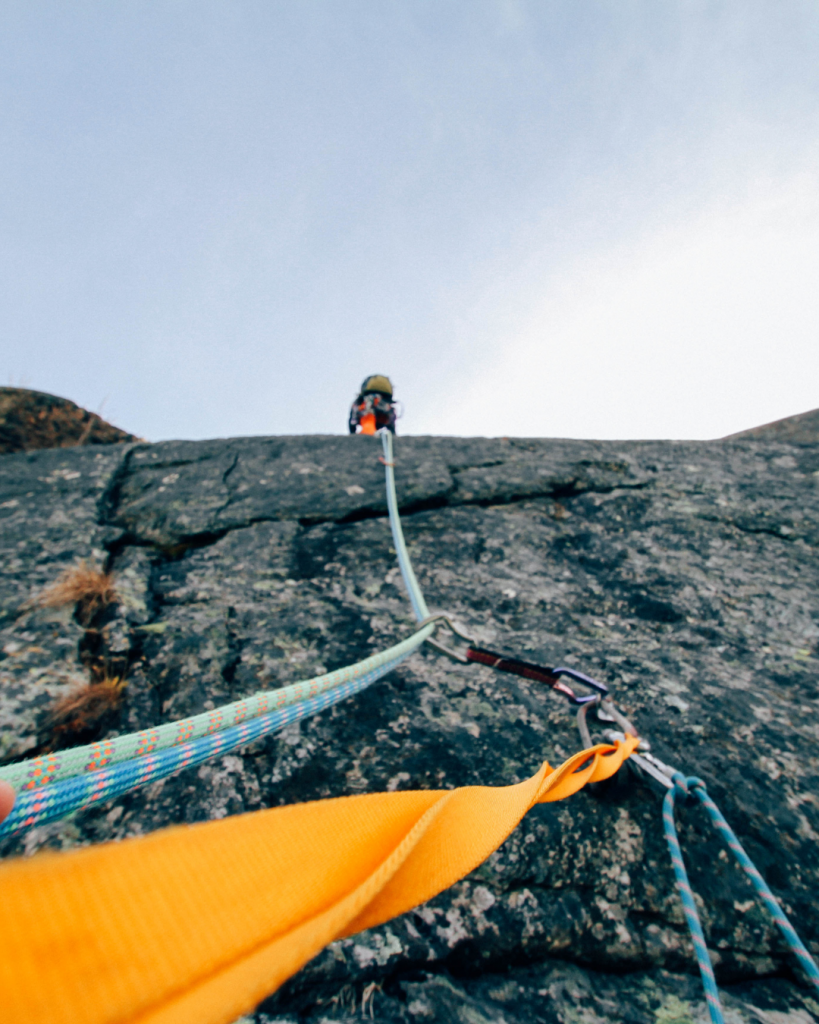
There’s a moment, suspended in the middle space of a hard climb, when your body wants to shake itself off the rock. Your fingers are cramping, your breath is ragged, and every sensory alarm is screaming at you to retreat. But you don’t. You breathe. You settle. You find the next hold. And in that moment, something profound is happening beneath your skin: your central nervous system is learning that you can tolerate more than you thought possible.
This is the work that matters. Not the aesthetics of it, not the Instagram story, but the quiet, cellular-level transformation that happens when you consistently meet your edge and stay there long enough to adapt.
Your central nervous system is the master conductor of every experience you have; every sensation, every movement, every emotion, every thought passes through this intricate network of nerves and neurones. It’s the command centre that decides whether you’re safe or threatened, whether you can rest or need to mobilise, whether you can access curiosity or only fear. And here’s what most people don’t realise: you can train it. You can condition your nervous system the same way you condition your muscles, building capacity for stress, expanding your window of tolerance, teaching your body that discomfort doesn’t always mean danger.
I’ve spent years studying this intersection, where neuroscience meets wilderness, where psychology meets physical challenge, where ancient practices meet modern understanding. As a psychologist and wilderness therapist who also happens to throw heavy things competitively and spend significant time living rough in the Scottish Highlands, I’ve become fascinated by the deliberate cultivation of nervous system resilience. Not as a luxury or a wellness trend, but as a fundamental life skill that determines how we navigate challenge, loss, change, and the general brutality of being human.
The Science of Stress Adaptation
Your nervous system operates on a simple principle: it adapts to the demands you place on it. When you expose yourself to manageable stress (emphasis on manageable), your body doesn’t just tolerate it. It upgrades. It builds new neural pathways, strengthens existing ones, improves the efficiency of your stress response system, and expands your capacity to handle intensity without dysregulation.
This is called hormesis: the phenomenon where low doses of stress make you stronger. It’s the biological basis for everything from strength training to cold exposure to fasting. Your body encounters a stressor, perceives it as survivable, and responds by building more robust systems to handle similar challenges in the future. But here’s the crucial part: the stress has to be the right kind, at the right dose, with adequate recovery. Too little and you don’t adapt. Too much and you break down. The art is in finding that threshold where growth happens.
In the context of your central nervous system, this means deliberately engaging with experiences that activate your stress response, but in contexts where you maintain some sense of agency, where you can breathe, where you can regulate yourself back down. This is the difference between trauma and training. Trauma overwhelms your capacity to cope. Training expands it.


The Practices That Build Capacity
I’ve built my life around practices that condition the nervous system through different doorways. Some are ancient. Some are backed by decades of research. All of them work because they share a common mechanism: they teach your body that you can handle intensity and return to baseline. They expand your window of tolerance. They build what I think of as nervous system bandwidth; the capacity to experience a wider range of sensations, emotions, and challenges without tipping into overwhelm.
Strength training is perhaps the most straightforward example. When you pick up something heavy, whether that’s a barbell or a log or a stone, your entire system has to organise itself around that challenge. Your muscles fire, yes, but your nervous system is orchestrating the whole performance. It’s recruiting motor units, coordinating movement patterns, managing the perception of effort and fatigue. Every heavy lift is a negotiation between your body and your mind about what’s possible. And over time, as you progressively overload, your nervous system learns to recruit more efficiently, to tolerate higher levels of muscular tension, to stay calm under physical demand. The competence you build in the gym translates to competence everywhere else. You become someone who doesn’t collapse under pressure.
Climbing adds another dimension: verticality, exposure, fear management. I’m built wrong for climbing, genuinely, and I have a vertigo problem that makes it even more interesting. But that’s precisely why it’s valuable. Every climbing session is an exercise in nervous system regulation under genuine perceived threat. Your lizard brain is convinced you’re going to die, and you have to breathe through that conviction and move anyway. You learn to trust your body’s capability even when your fear response is activated. You learn that being frightened doesn’t mean you’re in danger. This is gold for mental health: the ability to separate emotional state from actual threat level.
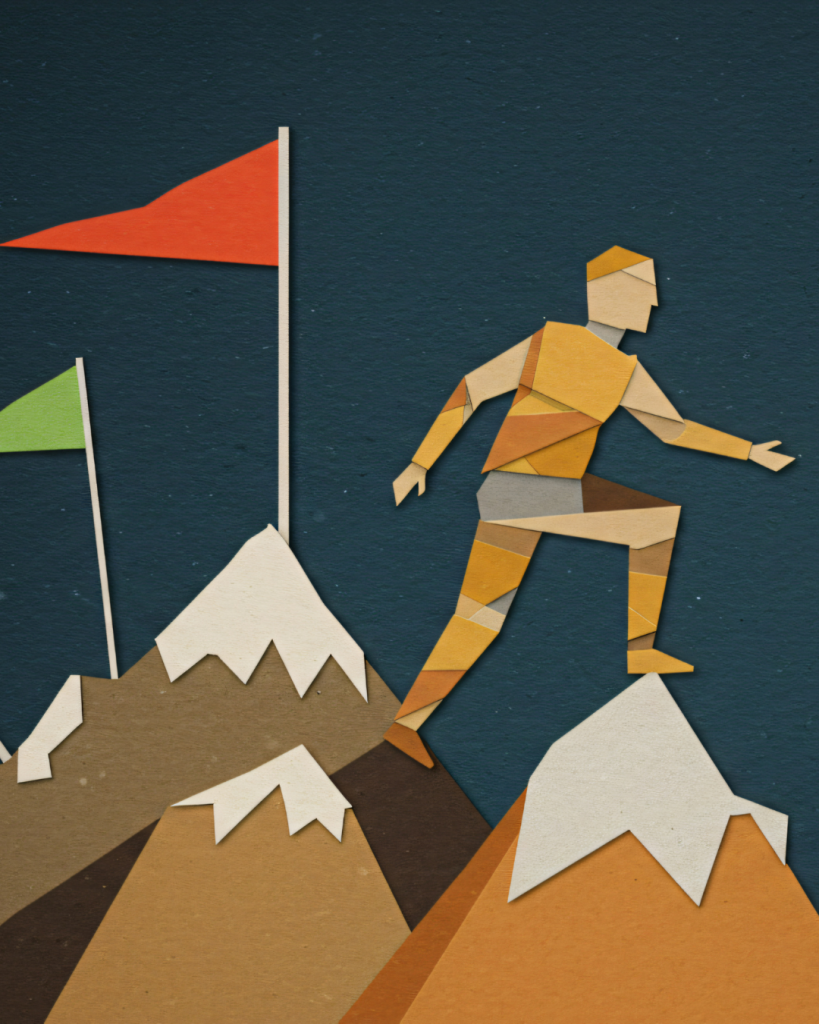
The misogi concept (a Japanese purification ritual that I’ve adapted into annual physical challenges) takes this further. Once a year, I do something that seems impossible, something that requires me to maintain function and decision-making under extreme duress. These aren’t performative stunts. They’re deliberate recalibrations of my nervous system’s threat assessment. When you complete something genuinely difficult, something your brain categorised as ‘impossible’, you fundamentally alter your relationship with challenge. Your nervous system updates its database of what you can survive.
Solo wilderness experiences might be the most profound nervous system training available. When you spend extended time alone in wild places, especially in conditions that are uncomfortable or demanding, you’re essentially doing exposure therapy for uncertainty and vulnerability. You’re training your nervous system to remain calm in the absence of modern comforts and guarantees. You’re learning to trust your own resourcefulness, to tolerate not-knowing, to find ease in conditions that most people would find intolerable. There’s something deeply settling about discovering that you don’t need as much as you thought you did. Your nervous system stops scanning for threats quite so frantically when you’ve proven to yourself that you can handle adversity.
Survival skills training feeds into this same capacity. When you know how to make fire, find water, build shelter, navigate without technology; when you have embodied competence in meeting your basic needs, your baseline anxiety decreases. Your nervous system can rest a little more because you have evidence that you’re capable in crisis. This is why bushcraft and wilderness skills are therapeutic, not just recreational. They build genuine confidence, not the affirmation kind, but the ‘I know what I’m doing and I can trust myself’ kind.

The Recovery Practices
But here’s what matters just as much as the challenges: the practices that teach your nervous system how to downregulate. Because resilience isn’t just about tolerating intensity; it’s about being able to return to rest. It’s about flexibility between states. A truly robust nervous system can activate hard and fast when needed, and then soften back into ease. This oscillation is health.
Breathwork is direct nervous system communication. When you deliberately slow your exhale, when you practise coherent breathing or box breathing or any technique that emphasises parasympathetic activation, you’re literally sending safety signals from your body to your brain. You’re teaching your nervous system that you have agency over your state, that you’re not at the mercy of your arousal level. I use breathwork before heavy lifts, during difficult climbs, in cold water, and in moments of ordinary anxiety. It’s the Swiss Army knife of nervous system regulation.
Cold water immersion is perhaps the most intense nervous system training I practise. The cold hits your skin and your system panics: every alarm goes off, every fibre wants to escape. And you stay. You breathe. You find calm inside intensity. Cold exposure trains your nervous system to override the panic response, to maintain executive function under extreme sensation. The adaptation that happens isn’t just physical (yes, your brown fat increases and your metabolism shifts) but neurological. You become someone who can stay present in extreme discomfort. That capacity transfers to every other challenge you’ll face.
Meditation and yoga work from a different angle but towards the same end. They train interoception (your ability to sense what’s happening in your body) and they strengthen the connection between awareness and regulation. When you spend time observing sensation without reacting to it, when you practise being with discomfort in a held posture or returning your attention to the breath for the ten-thousandth time, you’re building the neural infrastructure for self-regulation. You’re strengthening the pathways between your prefrontal cortex and your limbic system, improving your ability to respond rather than react.
The Lifelong Benefits
A well-conditioned nervous system is perhaps the most valuable asset you can develop. It determines your mental health more than almost any other factor. It affects your physical health through the mechanisms of chronic stress and inflammation. It shapes your relationships through your capacity for co-regulation and emotional availability. It influences your decision-making, your creativity, your ability to take risks, your capacity for joy.
When your nervous system is resilient, you can encounter difficulty without catastrophising. You can experience intense emotion without becoming dysregulated. You can rest when it’s time to rest and mobilise when it’s time to move. You have access to the full range of human experience without getting stuck in any particular state. You become flexible, adaptive, responsive: the qualities that allow us to navigate an uncertain world with some measure of grace.
This is preventative medicine in the truest sense. We spend so much time and money treating the downstream effects of chronic nervous system dysregulation (anxiety, depression, cardiovascular disease, immune dysfunction, chronic pain) when we could be building the capacity to handle stress more effectively in the first place. Not through avoidance or comfort-seeking, but through intelligent, progressive challenge that teaches our bodies they’re stronger than we think.

The Practice
This work doesn’t require radical life changes or exotic practices. It requires consistency with whichever doorways appeal to you. Maybe it’s a daily cold shower and a weekly heavy lifting session. Maybe it’s a regular yoga practice and monthly solo overnight trips. Maybe it’s breathwork every morning and a climbing session that scares you a little. The specifics matter less than the principle: regularly place demands on your nervous system that are challenging but manageable, then give it time to recover and integrate. Do this over months and years, and you build a foundation of resilience that serves you in every context.
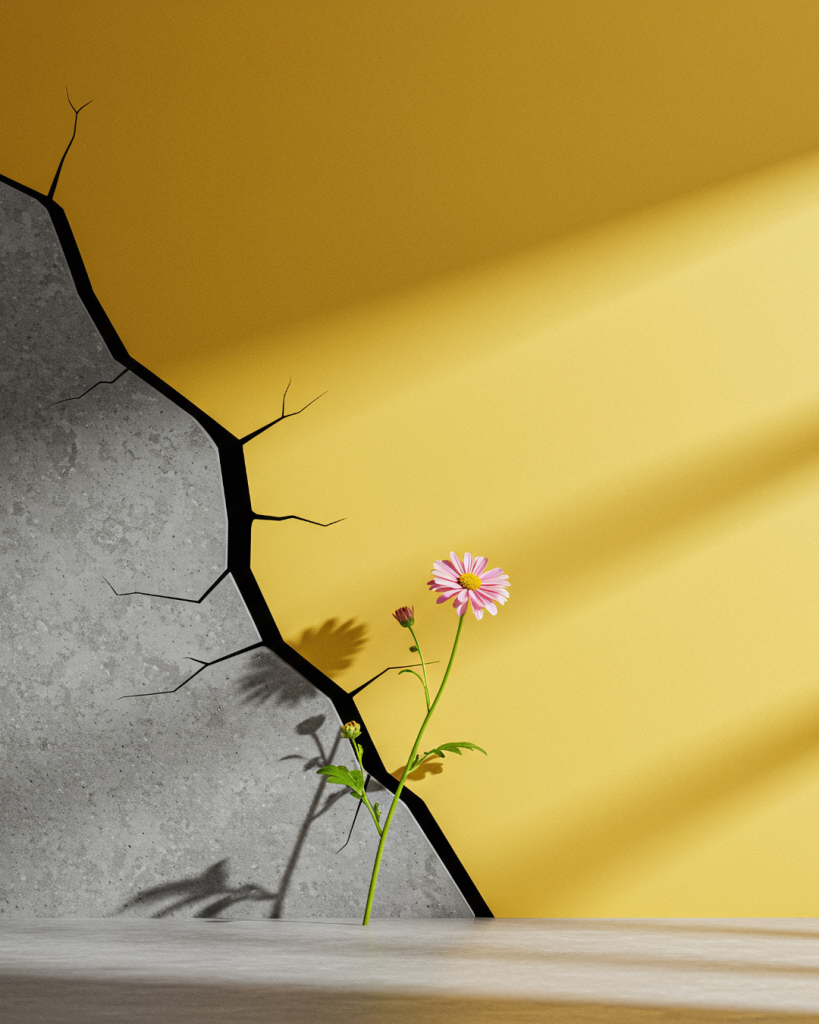
Your nervous system is listening to everything you do. Every choice to stay when you want to flee, every practice session in regulation, every deliberate exposure to beneficial stress: it’s all data, and your body is adapting. You’re building architecture that will serve you through every season of your life. And in a world that’s uncertain and often overwhelming, that capacity to remain steady inside difficulty isn’t a luxury. It’s survival. It’s freedom. It’s how we stay human in conditions that might otherwise break us.
The work is hard. The work is worth it. Your nervous system is waiting to become everything you need it to be.
No responses yet